Tag: art

  • In Conversation                      with Ludlow & Veh

    In Conversation with Ludlow & Veh

    Join Art Specialist Katherine Meredith as she speaks with Simone Ludlow and Erika Veh, designers of handmade one-of-a-kind cushions using vintage fabrics. Their company Ludlow & Veh also offers interior design and art advisory consultations. With backgrounds in art history, auctions, design and marketing, they share Katherine’s passion for collecting art with patience and intention.

    How would you describe your design style?

    Slow design. Not all the same style, not all the same era. Balance, texture, layers, not matching, eclectic. We love including vintage pieces and antiques, something with a patina and a story to it. If you do it intentionally and lovingly, it will work. Never feel like something is done. There is an expression that goes something like- “a room is only finished when you run out of money!”

    Where do you find inspiration?

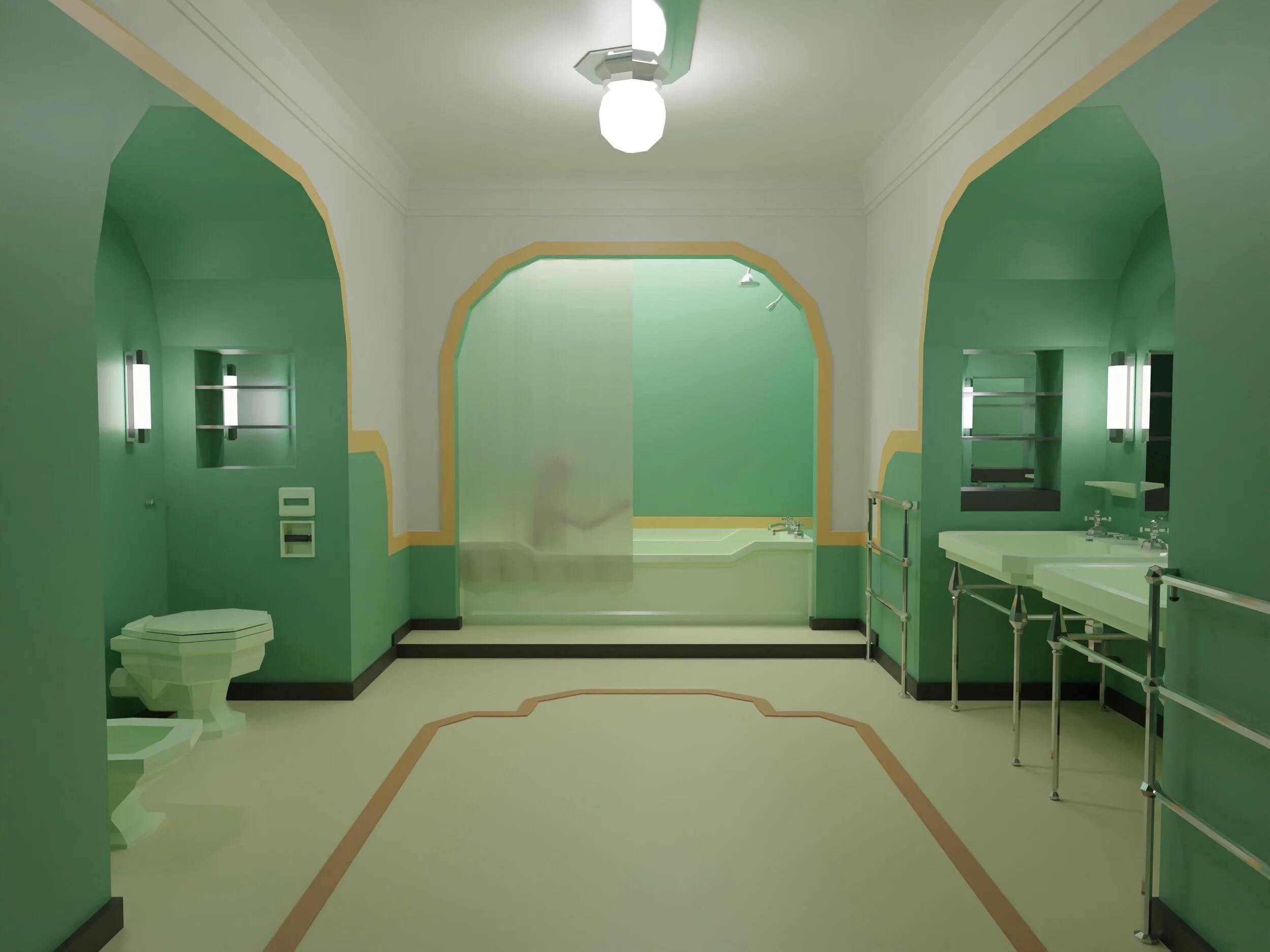
    Art, nature, travel, film. Pedro Pascal’s apartment in the recent film Materialists, and movies like Home Alone, The Shining, I am Love, and The Birdcage. We are inspired by place and time. Matisse interior paintings. Unusual colour combinations we spot on the street or in nature.
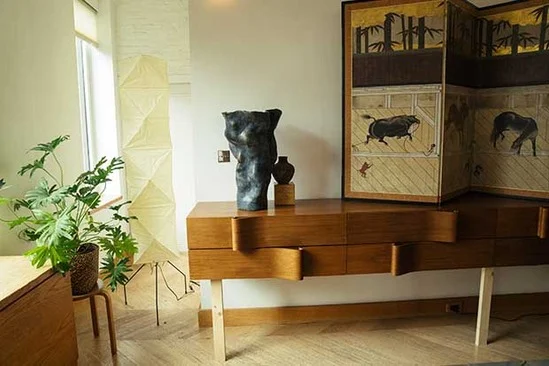
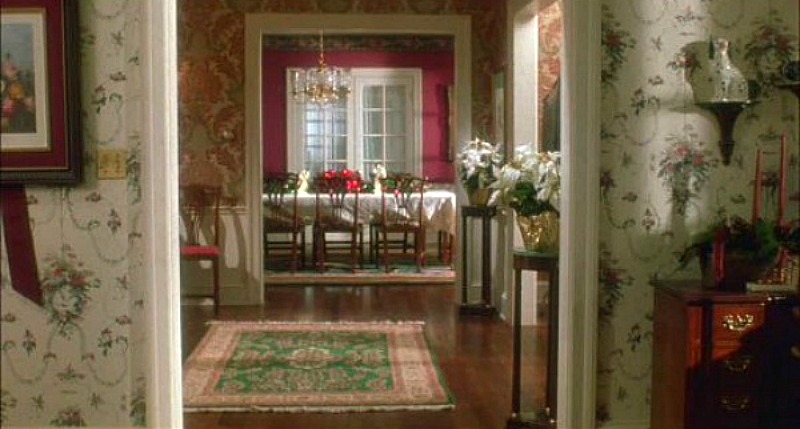
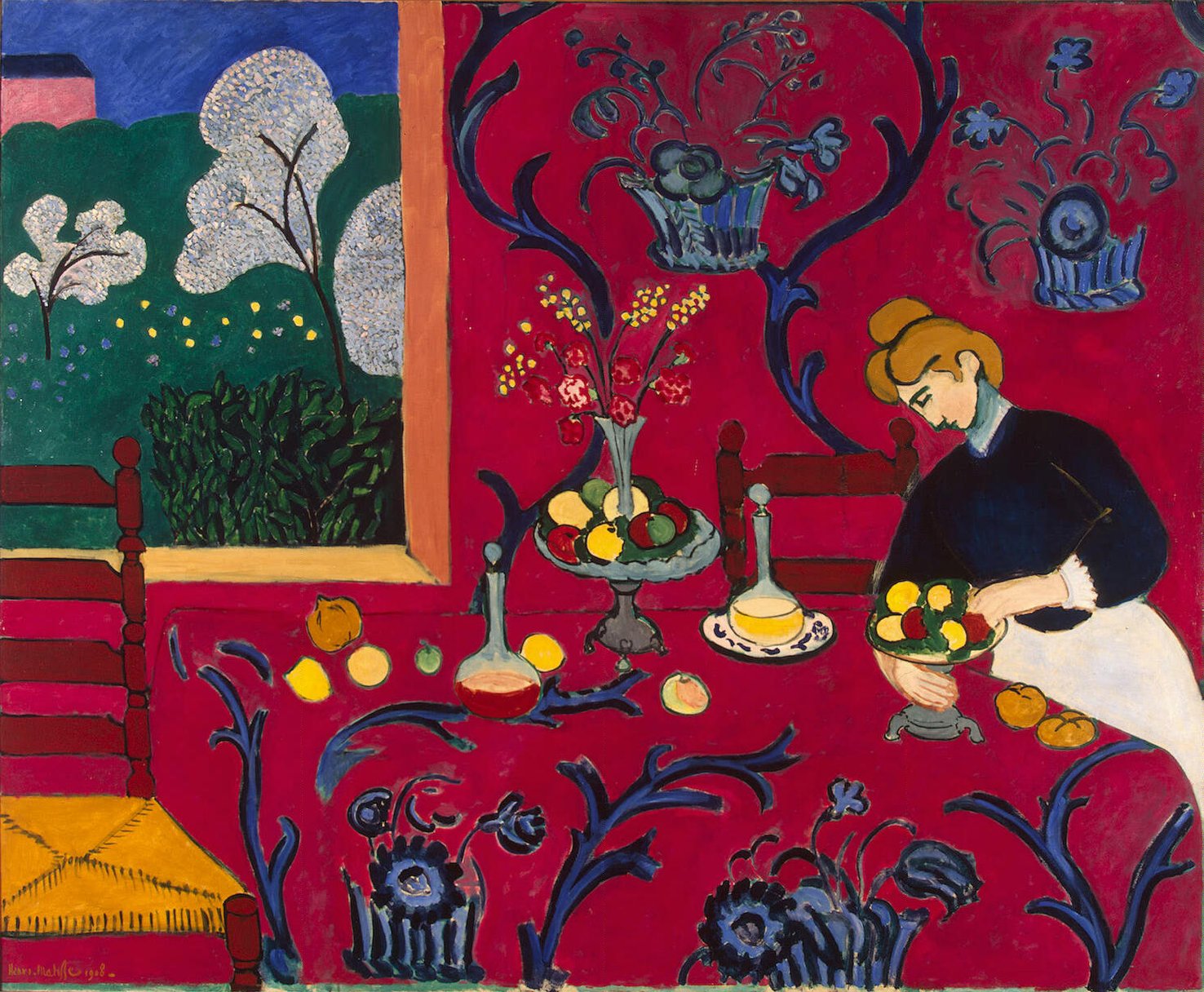
    Why do you think original fine art is an important part of interior design?

    It’s a layer that finishes everything. Art adds a depth and a tone of your own personality to your home. There is something lively to a home filled with original art. It takes emotion. You don’t want your house to look like a staged showroom, or the same as the house down the block. A mass-produced print from a box store doesn’t elicit pleasure, it just fills a wall. Art adds personality, meaning, joy.


    What advice would you give to someone who is new to art collecting?

    Buy what you love, and then your house will be a reflection of your personality. It doesn’t matter if the artist is new, local, unknown or from the past. It doesn’t have to be expensive. It should be something that speaks to you. Don’t set out to buy art that matches your decor. If you love it, it will work and you will find a place for it. Have a bit of patience. People want things so quickly and so effortlessly, but it means so much more when you take your time and put effort into it, and it shows. You feel better about it because it’s a reflection of you.
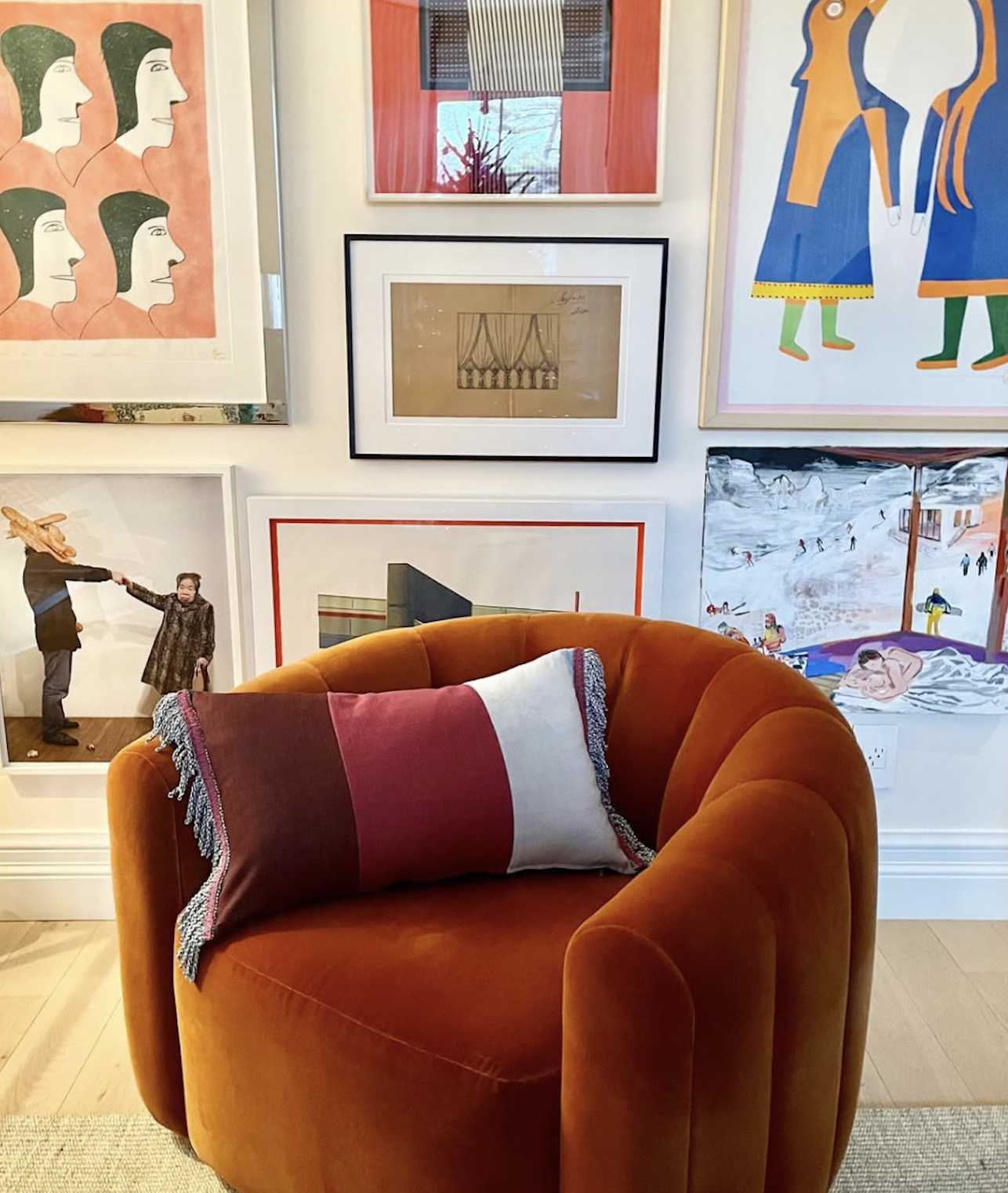
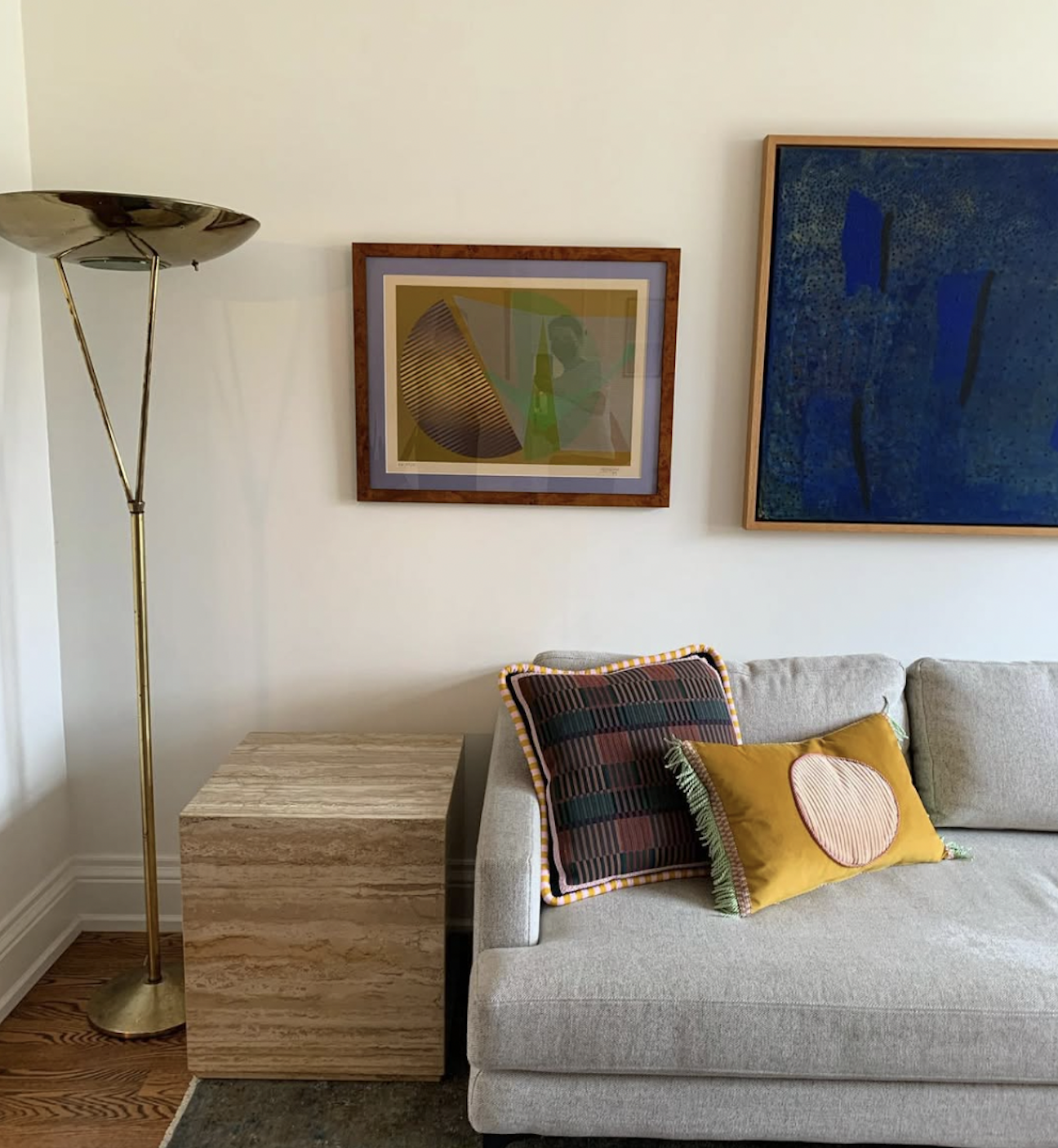
    How do you approach auctions specifically, in comparison to other ways of acquiring art? Do you find any advantages or challenges?

    Advantages: you see such a broader scope of art, and artists you wouldn’t normally see or necessarily seek out. Better value. There’s no inflated art gallery commission – the price is what the market will stand.

    Challenges: the high volume of artwork – you have to have the patience to look through the entire listing. Everything at auctions is framed “as-is” and it can be difficult to imagine a work in a new frame that is better suited to your space. But framing is everything and can really transform the art and the room!


    If you could choose any artworks from Canadian art history to put in your own living room, what would you choose and why?

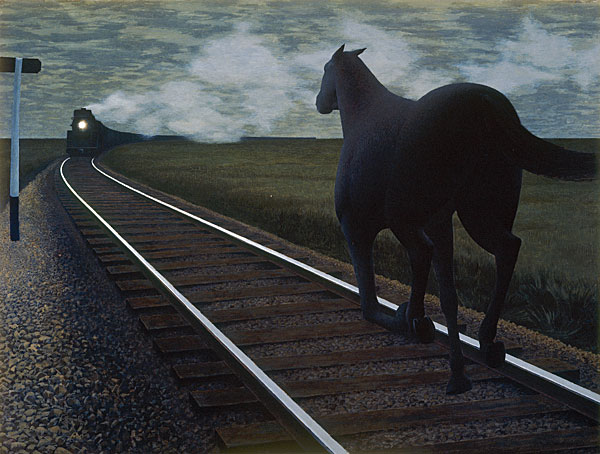
    Erika: There are many Canadian artists I admire and support. If I have to select just one piece – I would have to say Horse and Train (1954) by Alex Colville. Its haunting simplicity captures the tension between nature and machine, which feels very relevant at this time in the world. It also evokes a sense of Romanticism in the solitary, noble horse confronting the unstoppable force of modernity. A reminder that life is constantly moving, changing, and that inevitably time escapes us all. 
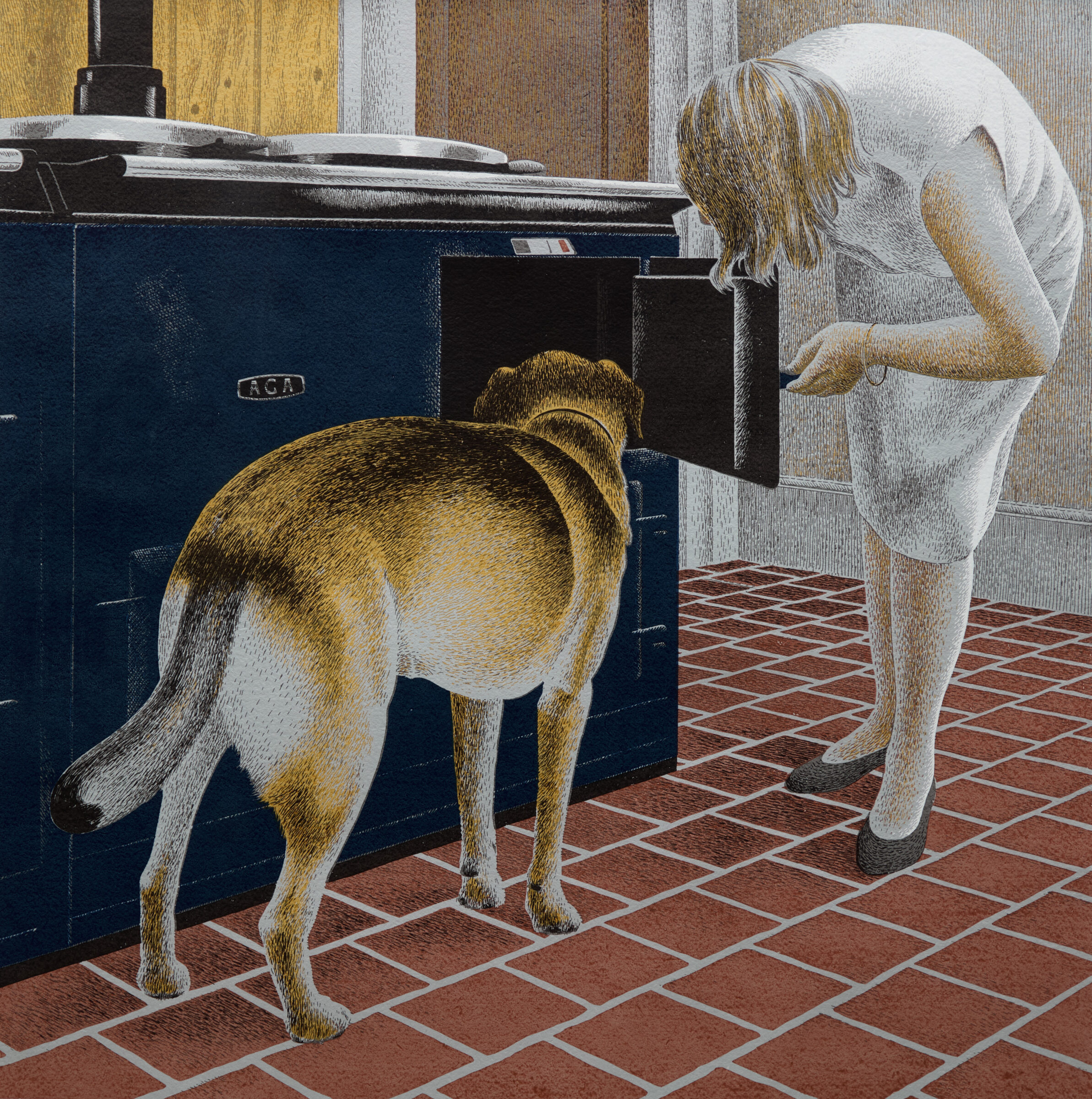
    Simone: This is almost impossible to answer, so I’m simply going with immediate impulses. I love Alex Colville, and I especially love his works featuring dogs, so perhaps Stove. It’s such an intimate and tender piece, and it captures so well the simple (and magical) joy of sharing your life with a dog.

    I also love Jessie Oonark, so almost anything by her. I love her use of colour, and the bold, graphic nature of her work.
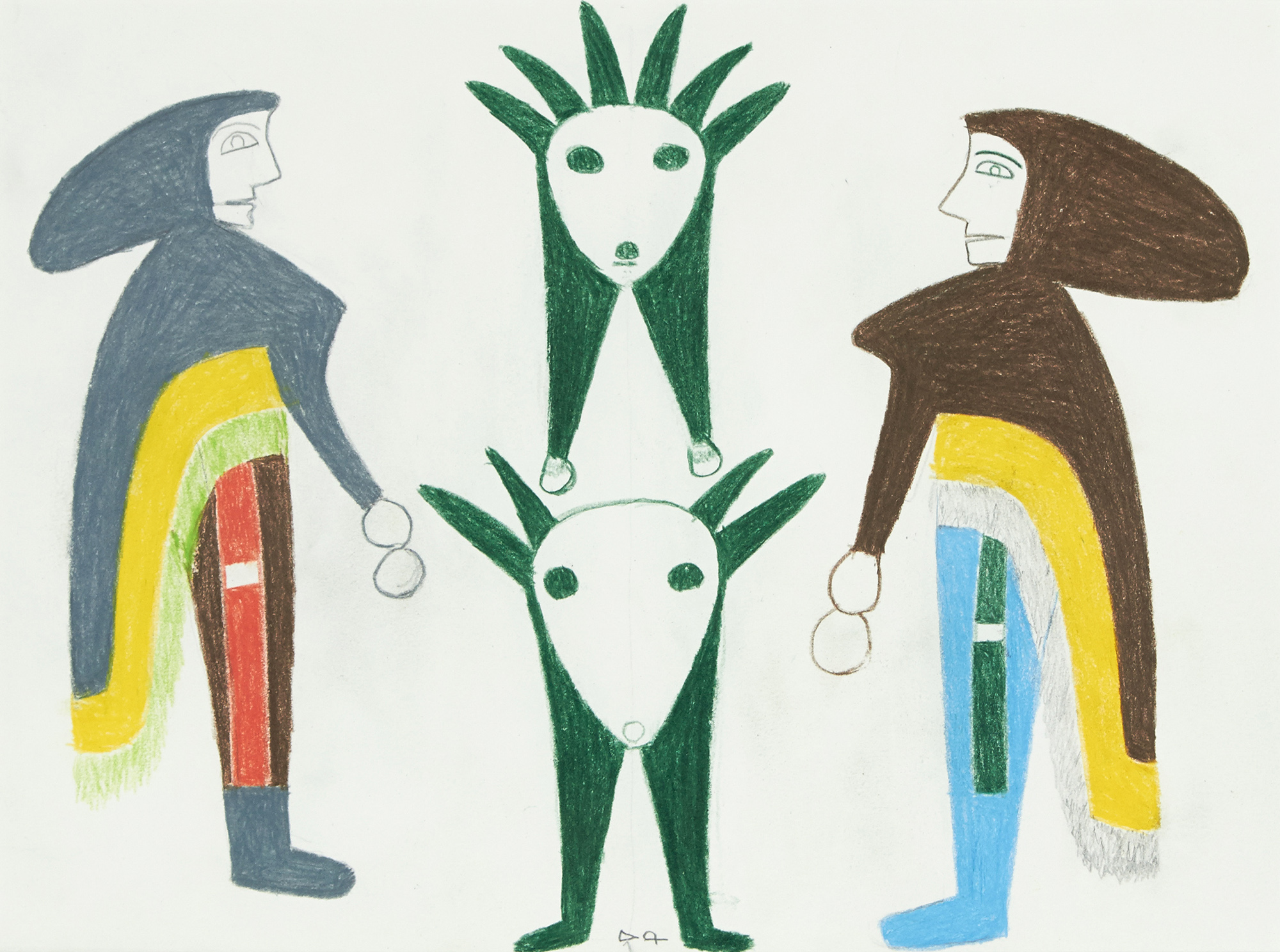
    Untitled by Jessie Oonark. Sold by Cowley Abbott in 2014.

    Margaux Williamson’s more recent works of interiors are also favourites. As I mentioned before, I gravitate to pieces featuring interiors, and Margaux’s are so interesting and I find them entirely
    captivating.

    And I mean, who wouldn’t want a Lawren Harris iceberg?

    If you could choose any artworks from ALL of art history to put in your own living room, what would you choose and why?

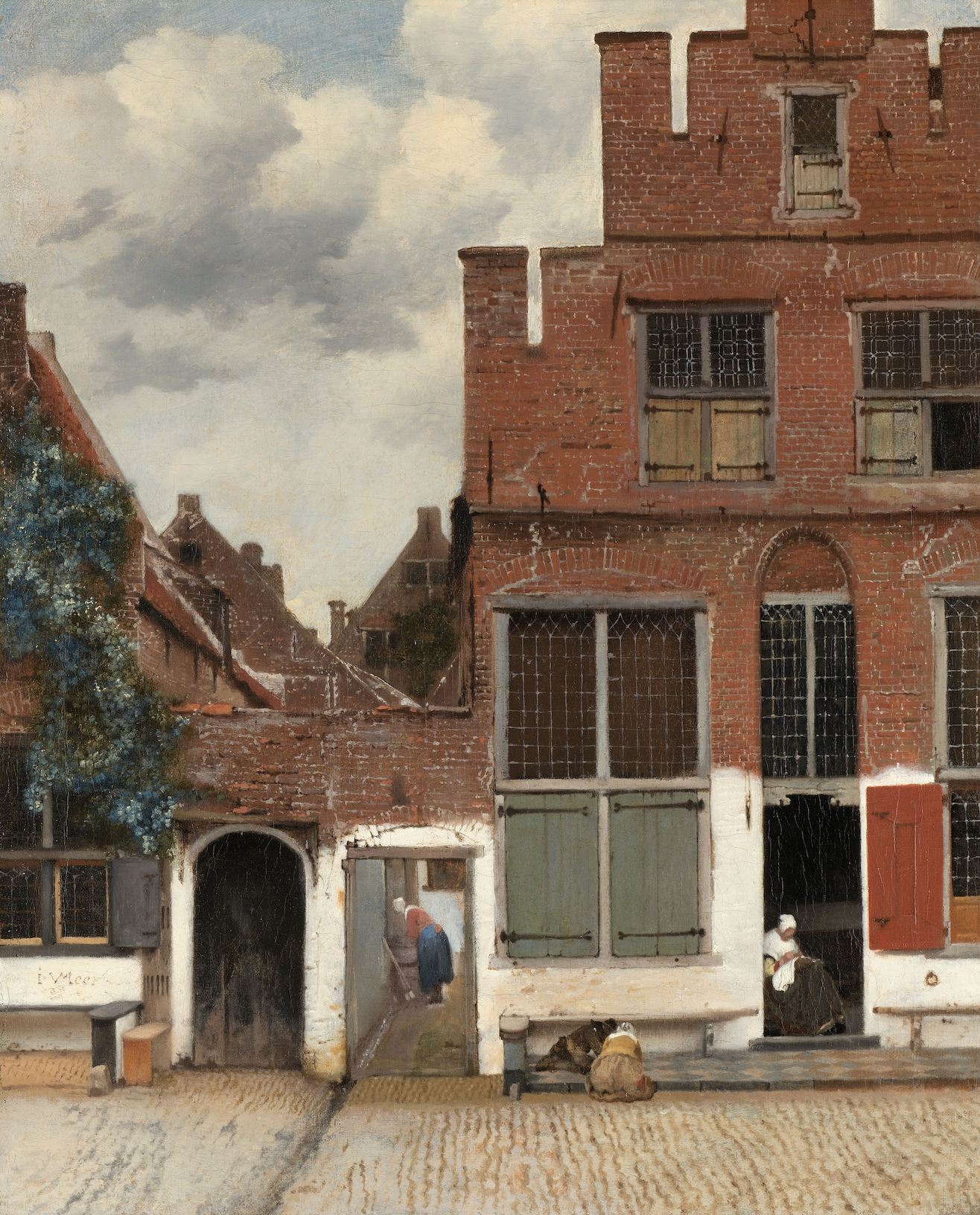
    Simone: This is truly an impossible question! Based entirely on immediate instincts – The Little Street by Vermeer at the Rijksmuseum. I also have always loved David Hockney; he’s so joyful and loves life, and that is so apparent through his work. I saw his recent retrospective in Paris, and I am particularly drawn to the paintings of his home in LA and his British landscapes. Paul Nash’s 1930’s painting Harbour and Room at Tate Modern has also been a constant fascination. I also absolutely love the art and design from the turn-of-the-century Vienna Secession movement led by Gustav Klimt.

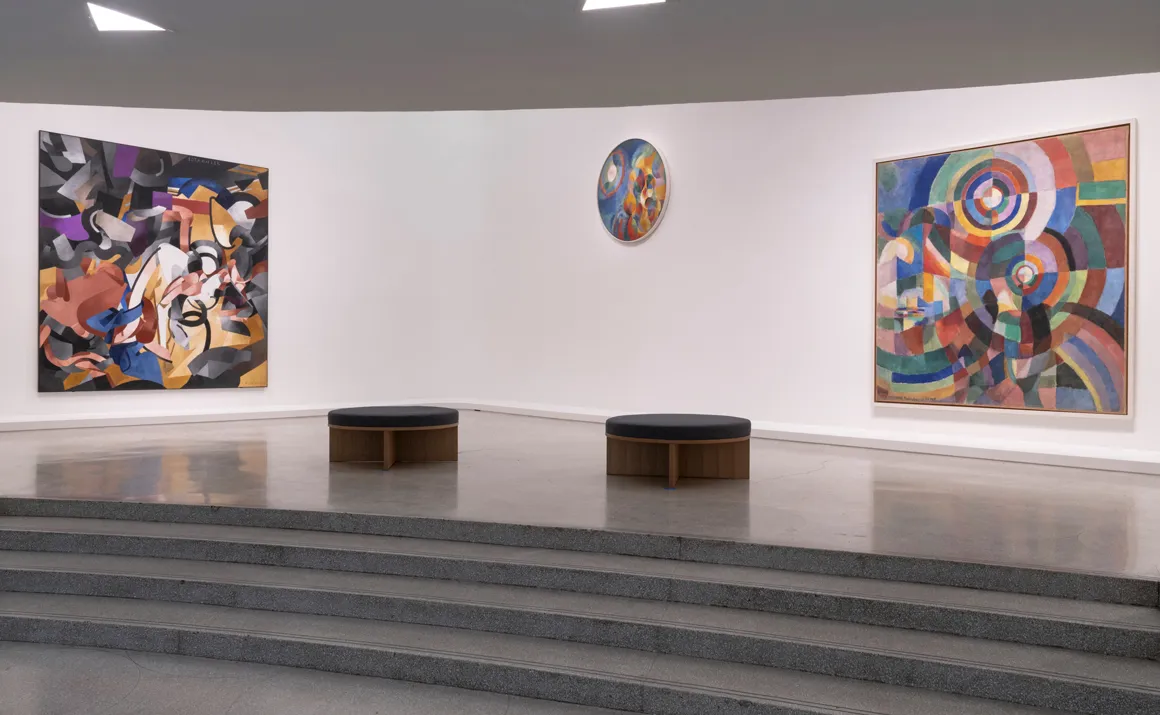
    Erika: If I could select a piece of art for my home, it would be Sonia Delaunay’s Electric Prisms (1914). I had the pleasure of viewing it in New York, Guggenheim’s exhibition “Harmony and Dissonance: Orphism in Paris 1910-1930”. Both the scale and bold rhythmic motions of colour have stayed with me ever since. I have also always carried the same admiration for the Nike of Samothrace at the Louvre, a timeless emblem of victory, hope and forward momentum.
    Which artworks from our September online auction do you have your eye on? And how would you style them in a room?

    Simone: What a wealth of beauty to choose from! One selection would be Lawren Harris’ Study of a Verandah. I love witnessing the traces of an artist’s process, and in this piece the sketches of the trees and the script on the paper’s reverse delight me. The verandah itself is also so inviting – the architecture draws the viewer in. I would love to sit there and have a glass of wine.
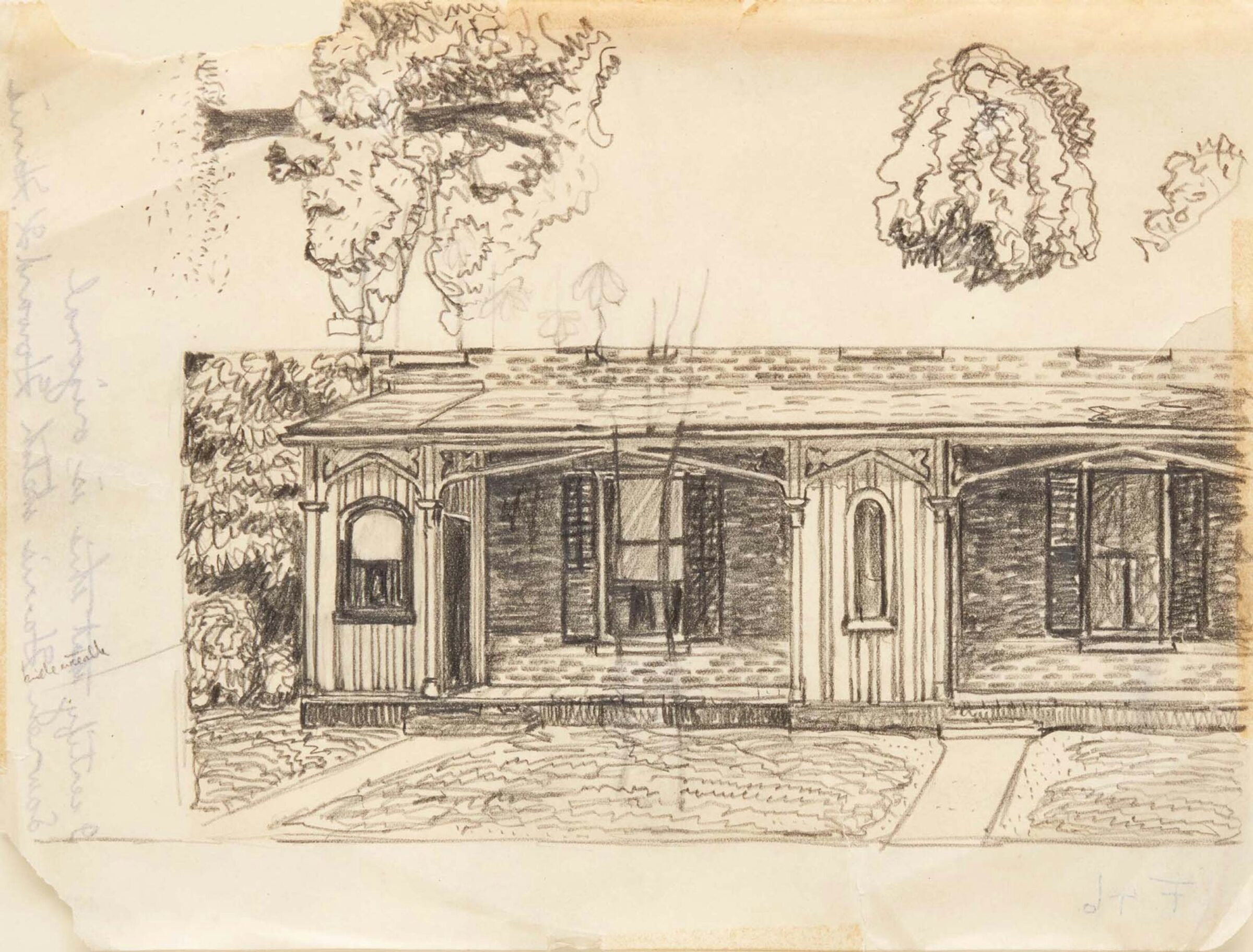
    Lot 199. Lawren Harris, Study of a Verandah. Graphite. Estimate: $3,000 – $4,000

    I also gravitate to Fortin’s Montréal. I love his use of colour and the somewhat chaotic, dense scene he has created. I went to school in Montréal, and this piece evokes the feeling of the city for me – layered, busy, a bit gritty, beautiful, full of life.
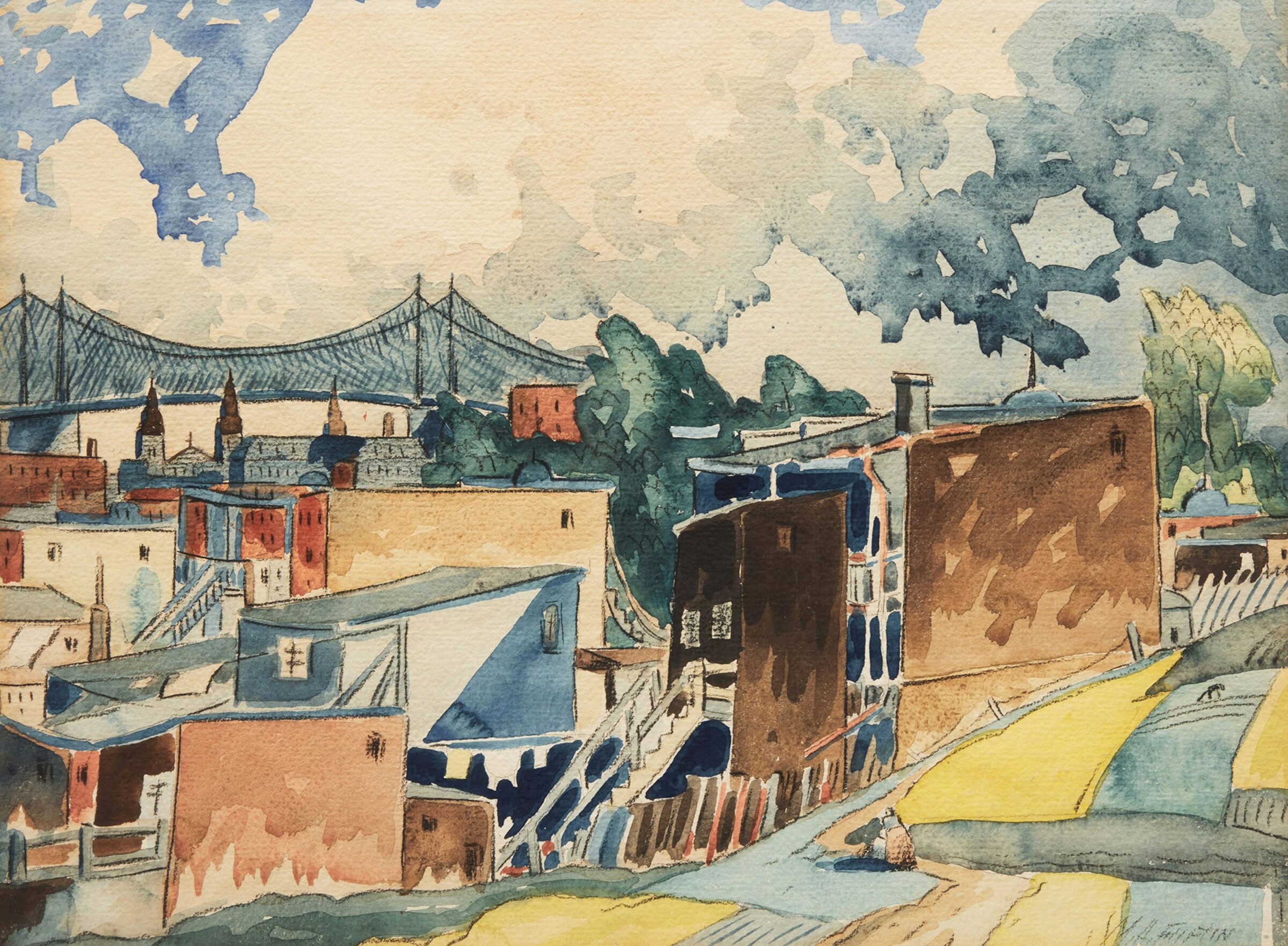
    Lot 125. Marc-Aurèle Fortin, Montréal. Watercolour. Estimate: $10,000-15,000

    I also must include some more graphic pieces – I always love them for balance. The colours in Fly me to the Moon by Frank Sinatra (who knew?) are beautiful, and I appreciate the feeling of motion that it suggests. Philomène by Jacques Hurtubise echoes the Sinatra piece in an interesting way, and I would love them displayed together. The blue and red are arresting, and I love their juxtaposition with the off-white ground.
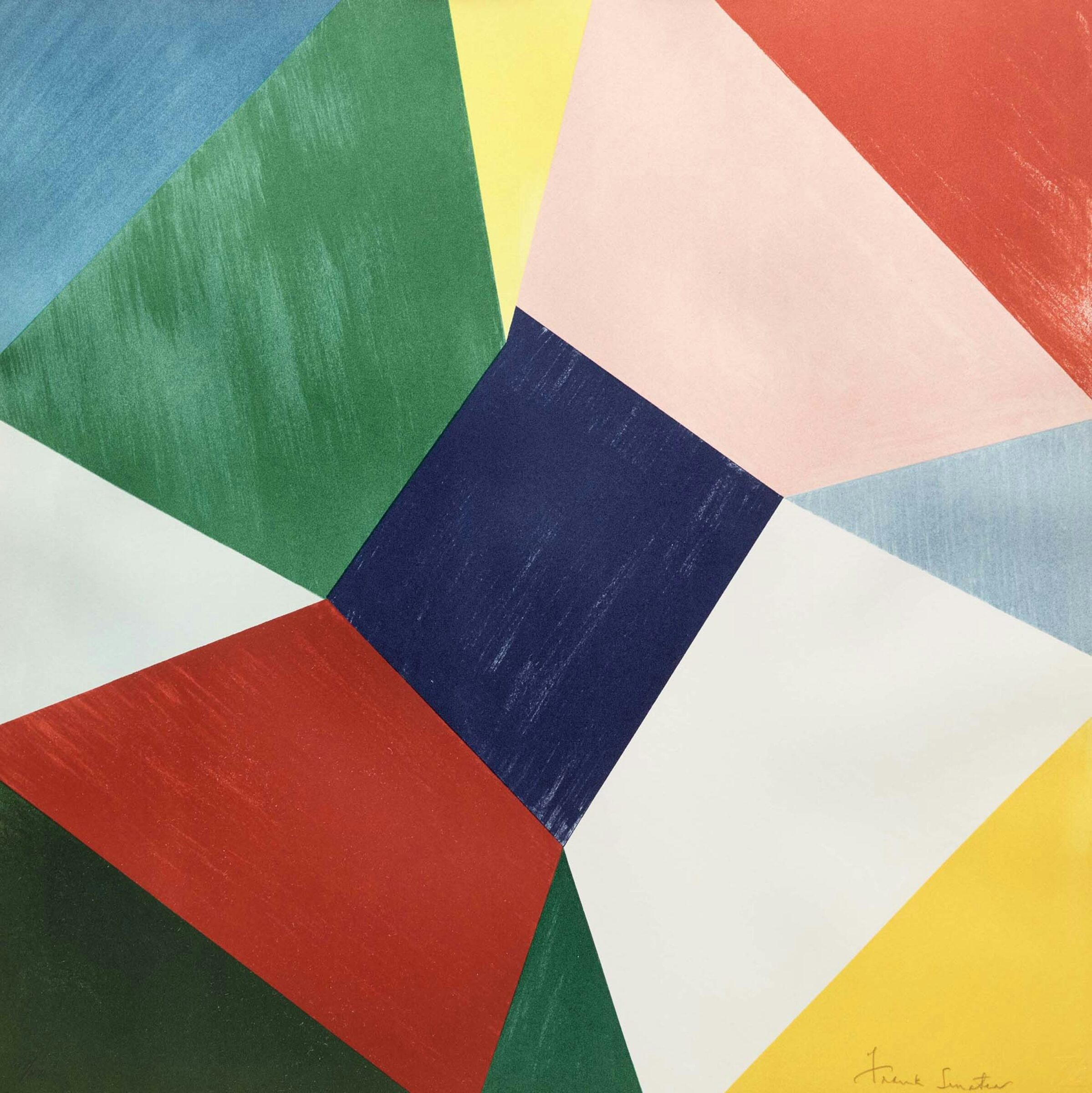
    Lot 17. Frank Sinatra, Fly Me To The Moon. Colour lithograph. Estimate: $900-1,200

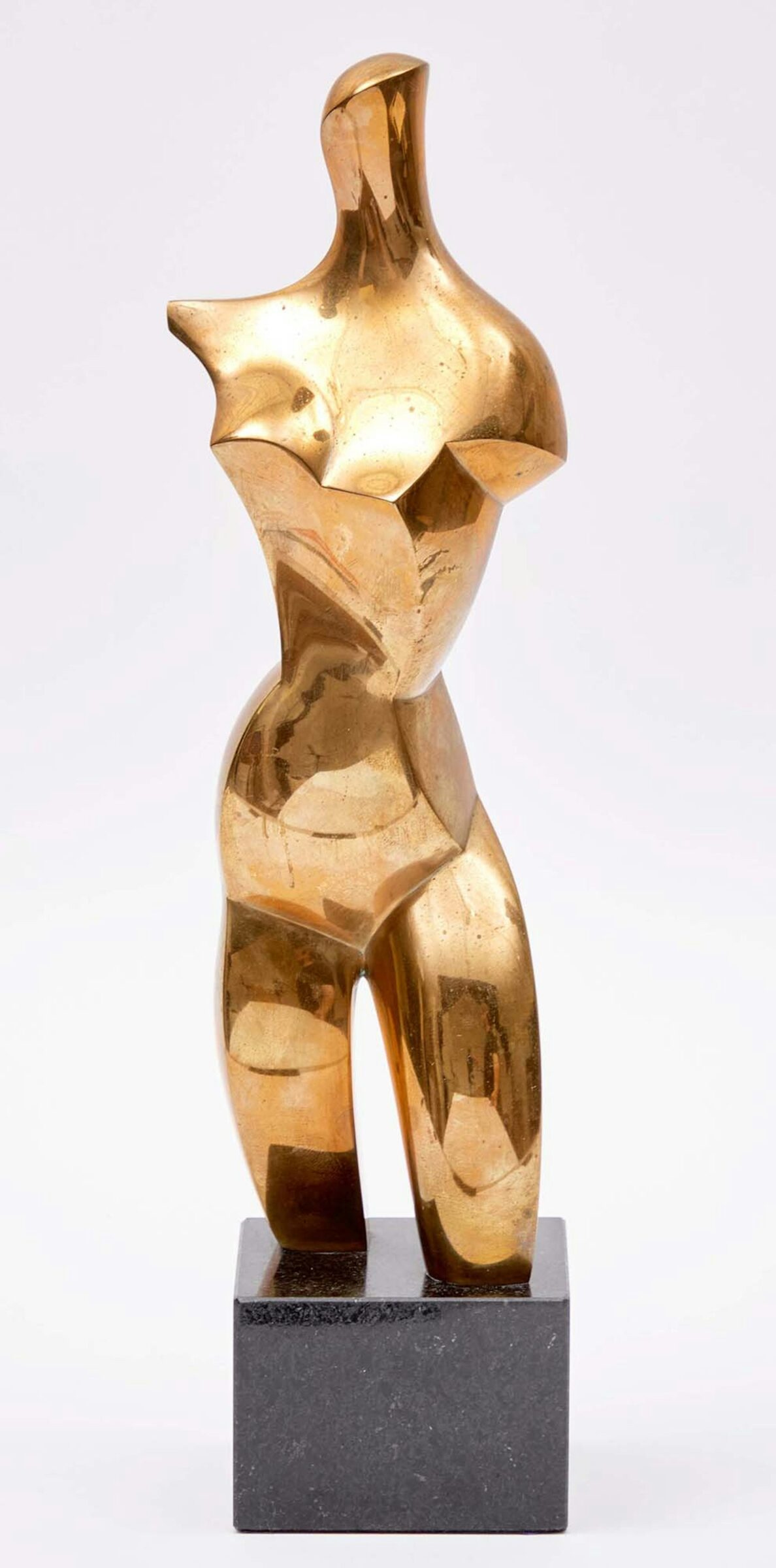
    Erika: I  am in love with Jim Ritchie’s female figure sculpture from the Quebec lot! It inspires me because it reminds me of the beauty, resilience and softness I recognize in the women I cherish in my life. 

    I also have a black and white striped marble plinth where this sculpture would look so stunning! 
    What I love about Winter Sleighing Scene by A.Y. Jackson is that, while the artist captures a distinctly Canadian winter scene, he departs from the expected palette of icy blues and greys, choosing instead a feminine blush for the sleigh and lively touches of pink in the trees. A choice that brings unexpected warmth and a smile to the winter scene. 

    Lot 207. A.Y. Jackson, Winter Sleighing Scene. Colour serigraph. Estimate: $600-800

    I was also drawn to Fly Me To The Moon by Sinatra for its bold shapes and vibrant interplay of colour, which is a style reminiscent of one of my favourite short lived art movements; Orphism  – with its rhythmic energy and sense of movement.  And perhaps also because the artist was also the infamous crooner! 

    For more information on Ludlow & Veh, check out their website and Instagram. And for further conversation on collecting art with intention, join Simone, Erika and the Cowley Abbott team for our 5 à 7 on Thursday, September 11th. RSVP at [email protected].

  • New Digs on Dundas: Ohler’s Fine Arts New Home

    30 years in Calgary, 6 years in Vancouver and now, later this spring, here on the second floor at Cowley Abbott on Dundas St. in Toronto, Peter Ohler will have a new home to meet with clients and show a selection of Top Quality Canadian Art available for Private Sale. Please feel free to contact Peter at [email protected] for more details or drop in to view his recent acquisitions.

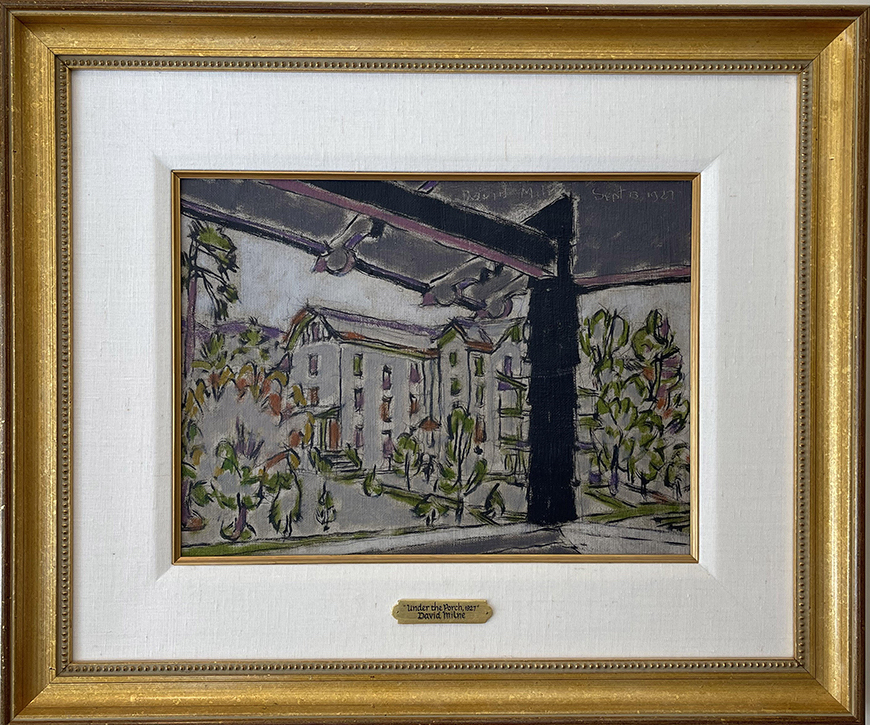
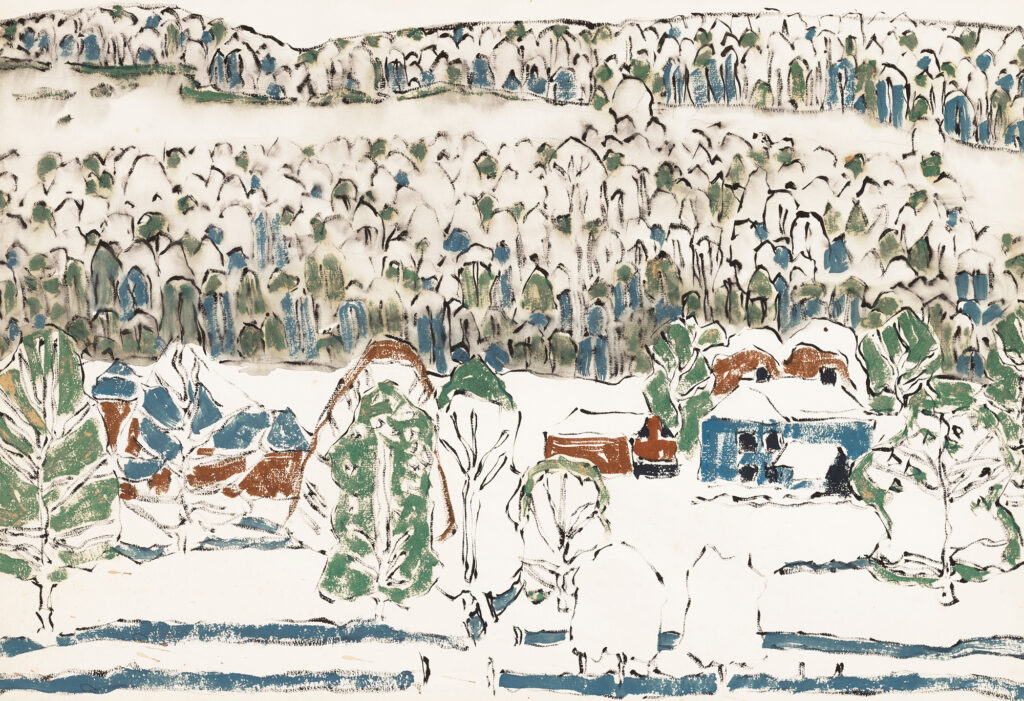
    One of the recent acquisitions that will be on display, a wonderful 1927 David Milne oil.

    David Milne
    Under the Porch, Big Moose Lake,
    Adirondacks, N.Y. 13 September 1927
    Oil on canvas
    12×16 in.

    Milne inventory #207.98

    Provenance
    Mira Godard Gallery, Toronto c.1980
    Private Collection
    Grace Borgenicht Gallery, New York, 1990
    Private Collection

    Exhibited
    Mira Godard Gallery, Toronto, Centenary
    Exhibition, 1982, no. 7

    The verandah of the staff house at the Glenmore Hotel on Big Moose Lake provided David Milne with a sheltered painting place on several occasions. Under the Porch as well as The Glenmore, Big Moose, and Hotel Across the Way were all painted from this location.

    During the five years between the spring of 1924 and 1929, Milne’s life was split between Big Moose Lake in the summers (where his time was largely absorbed by building a teahouse) and Lake Placid in the winters (where he and Patsy ran the teahouse at Ski-T, at the foot of the Intervale ski-jump). The construction schedule at Big Moose Lake and the responsibilities at the Lake Placid Club cut heavily into Milne’s painting time and, although he produced some outstanding paintings, his overall production fell sharply.

    David Milne Jr and David P. Silcox, David B. Milne, Catalogue Raisonné of the Paintings, Toronto, 1998, cat. no. 207.98

  • Oh! You Pretty Thing: David Bowie Painting sets New Auction Record in Cowley Abbott International Art Auction

    Oh! You Pretty Thing: David Bowie Painting sets New Auction Record in Cowley Abbott International Art Auction

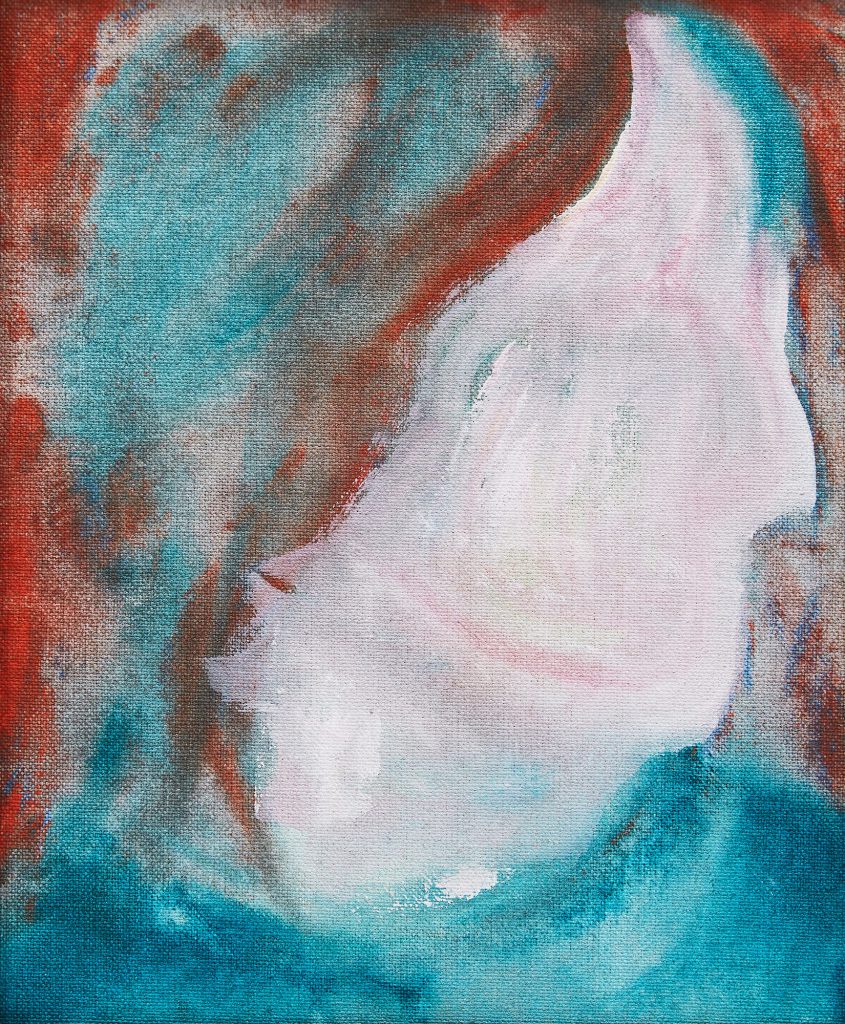
    David Bowie, D Head XLVI

    “If you come from art, you’ll always be art” – David Bowie

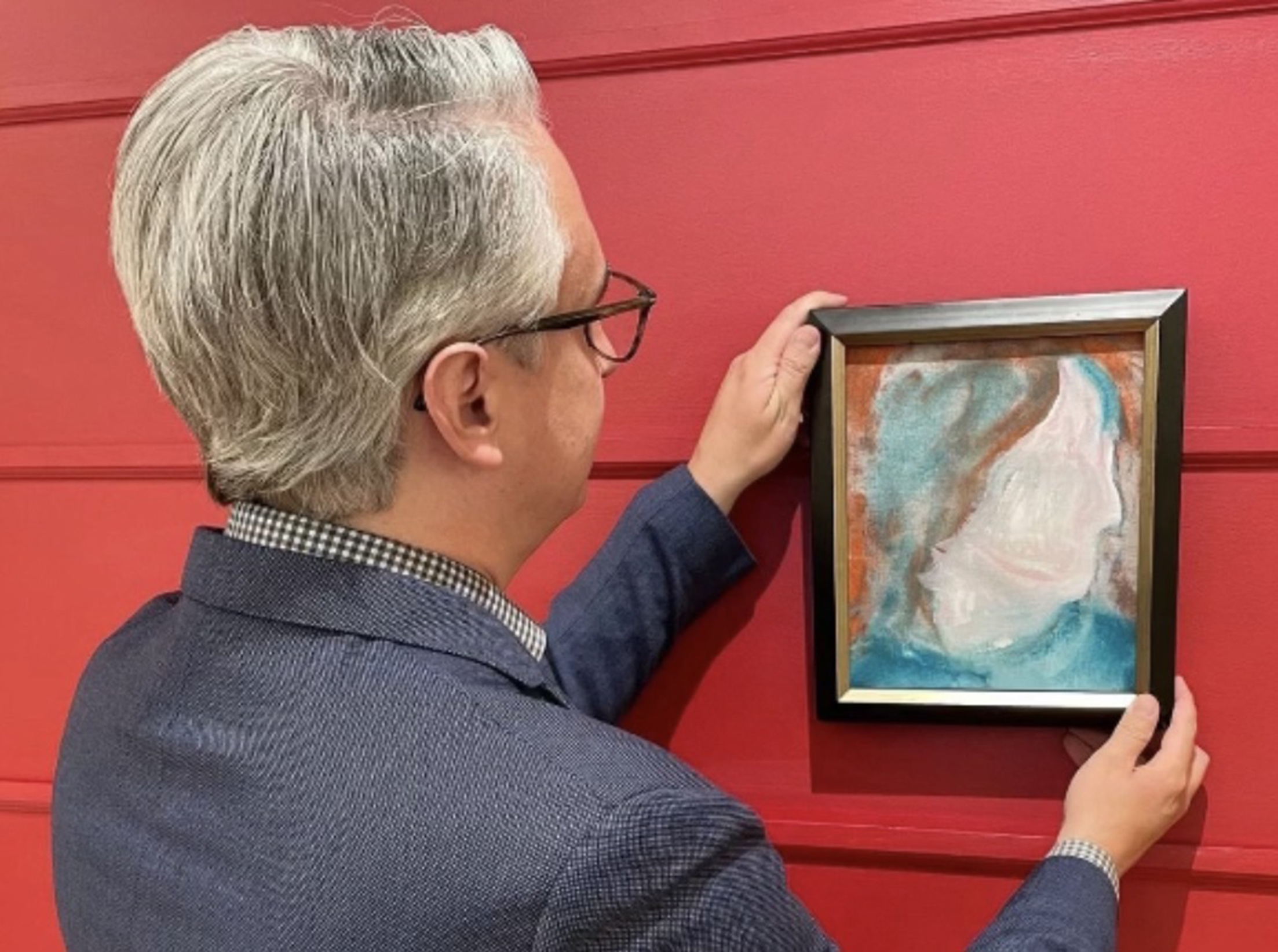
    Attracting attention from collectors around the globe, David Bowie’s DHead XLVI fetched $108,120 CAD during the Cowley Abbott Spring International Art Auction, which closed on Thursday, June 24th. The small portrait, which was purchased at a donation centre in Northern Ontario for $5, drew bids from clients located across Canada and well beyond our borders, finally selling for almost ten times the pre-sale auction estimate of $9,000-12,000, establishing a new global auction record for an artwork by David Bowie.

    David Robert Jones, known more commonly as David Bowie, was an icon of the music industry and of twentieth century pop culture. Like many musicians, Bowie studied art and design as a young man, which would foster a love of fine art throughout his lifetime. He was also a passionate collector and painter, heavily influenced by the modernist art trends of the twentieth century; his paintings possess the stylistic influences of the German expressionists, Francis Bacon and the London School of painters. Bowie’s own work rarely appears at auction, so when Cowley Abbott was contacted about a painting entitled D Head XLVI, there was a cautious excitement.

    D Head XLVI was found in the most unexpected place: a donation centre for household goods in South River, Ontario. The chance discovery of this treasure within a pile of discarded goods is quite remarkable. The consignor of the painting was astonished upon viewing a label which read “David Bowie” and realizing it was the signature of the artist inscribed on the reverse. After conducting thorough research, which included correspondence with a David Bowie specialist in the United Kingdom, we were able to confirm that the painting is indeed by the famous artist and part of a series that he completed in the 1990s. 

    Between 1995 and 1997 Bowie created a series of approximately forty-seven works on canvas which he entitled Dead Heads (or D Head). Each title included a non-sequential Roman numeral. The sitters ranged from band members, friends and acquaintances and there were also some self-portraits. It has been suggested that, for some of these important paintings, Bowie drew inspiration from the Ziggy Stardust era. With long hair and a pronounced profile, this energetic and enigmatic portrait is truly a rare representation from a celebrated artist (we can attempt to surmise who the sitter is, however, unfortunately the label does not confirm their identity.)

    Cowley Abbott was pleased to be entrusted with such an exciting artwork and delighted to share the painting and its story with collectors in the weeks leading to the auction. The story was carried by media outlets around the world, our firm’s excitement matched by Bowie fans and art collectors globally.

    Related Press:

    BBC (June 17, 2021)

    CNN.com (June 24, 2021)

    NPR (June 16, 2021)

    The Globe & Mail (June 25, 2021)

    The Daily Mail (June 25, 2021)

    Newsweek (June 16, 2021)

    CBC (June 24, 2021)

    Global News (June 15, 2021)

    National Post (June 28, 2021)

    BlogTO (June 11, 2021)

    Artnet News (June 24, 2021)

    Alan Cross: A Journal of Musical Things (June 24, 2021)

  • Cowley Abbott Auction a Celebration of Canadian Female Painters

    Cowley Abbott’s Live Auction of Important Canadian and International Art, taking place on September 24th at the Royal Ontario Museum, includes numerous works by celebrated Canadian female artists. Women artists have had a monumental impact on Canadian art throughout the decades. These accomplished artists have enriched the practice of visual art with their unique voices and distinctive artistic styles, developing an important facet within the Canadian art world. The breadth and talent of these female artists, and their significance in the past, present and future, is essential to the captivating story of Canadian art-making and collecting.

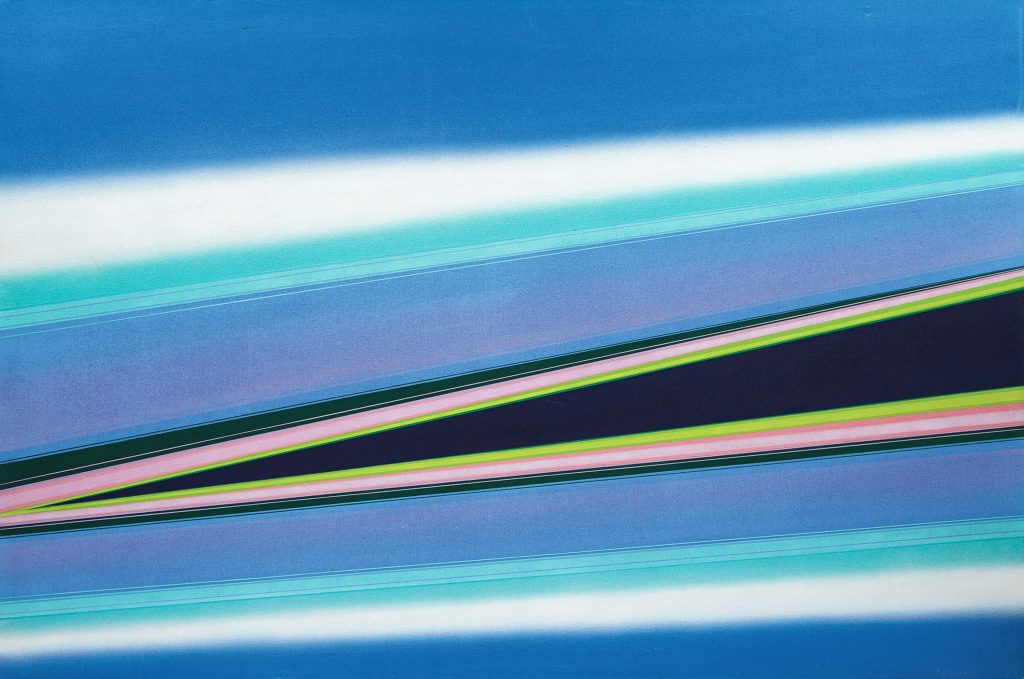
    Rita Letendre, Abstraction (1974)
    Rita Letendre, Abstraction (1974)

    The critically acclaimed Rita Letendre, a prominent abstract artist, born of Abenaki and Quebecois heritage, has had a significant artistic career of various stylistic periods, spanning decades and various geographic placements. Letendre’s career in painting was cemented in Montreal in the 1950s when she became associated with two prominent abstract groups in Quebec, Les Automatistes and Les Plasticiens. Letendre was often the sole female artist within the shows for these groups, and eventually developed away from their approach to painting, finding it too restrictive. 

    Letendre’s large canvases of the 1970s explore her fascination with depicting speed and vibration. The use of airbrushed paint creates a dimension of depth in “Abstraction” (lot 48), while the dramatic shift in palette occurs when the black ‘arrow’, framed by two vivid neon green and bright pink stripes, constrained by turquoise and azure bands, slices through the surface of the work. The sharp lines of bright colour all converge to a single point at the tip of the black ‘arrow’ in these works, magnifying and concentrating the energy. Like the birth of a supernova, light and energy burst forth from the image plane in “Abstraction”.

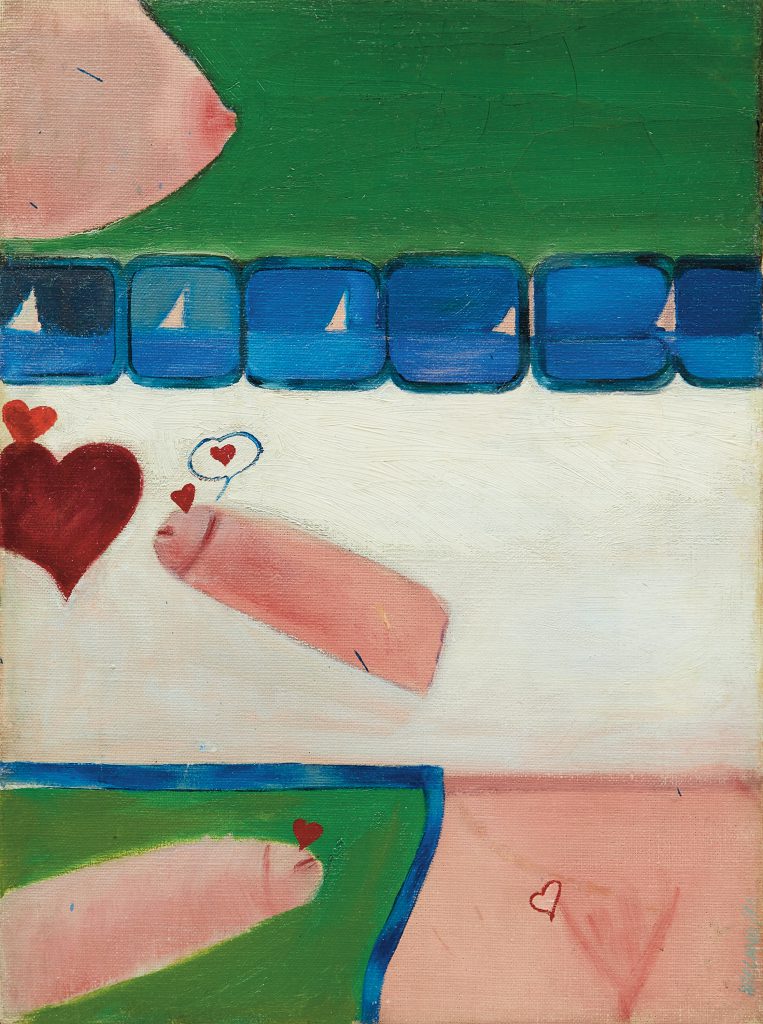
    Joyce Wieland, Conversation Piece (1960)

    Joyce Wieland studied design at Central Technical School in Toronto, before working as a graphic designer in the early 1950s and developing her practice in visual art. Wieland lived and worked with other artists in Toronto, eventually meeting the noted Canadian artist, Michael Snow, who she went on to marry. Wieland’s artistic career began to develop in 1960 when she held her first solo show after being included in a number of group shows. We recognize Wieland’s contribution to Canadian art for her experimentation with film, and her numerous paintings, assemblages, and mixed media works depicting themes of erotism and feminism.  

    Between 1959 and 1960, Wieland set up a proper studio space, purchased canvases and supplies and started executing larger scale works. Representing the first suggestion of her artistic future, the provocative works often featured phalluses, vaginas and hearts rendered in a humorous cartoon-like representation. Exploring this new lexicon, Wieland called these works her “sex poetry”. During a time where the female subjugation from her male contemporaries was celebrated, Wieland turned the tables and gazed at the male with the same liberty and lust automatically afforded to these male artists. “’Conversation Piece’ with a Short on Sailing” (lot 51) exemplifies this cheeky and boundary pushing question of gender politics. 

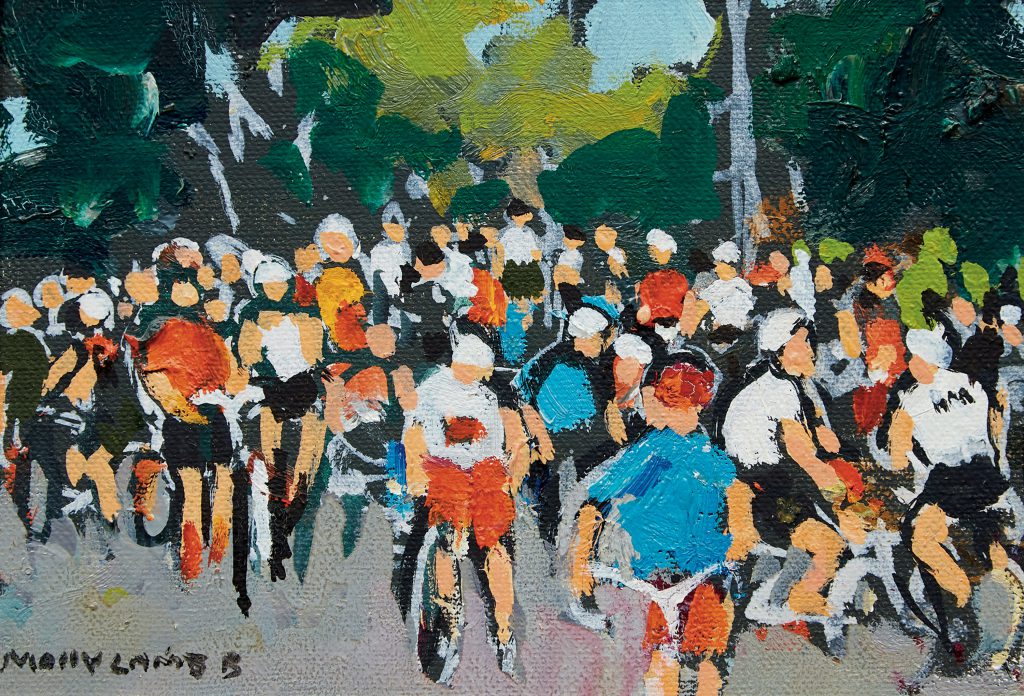
    Molly Lamb Bobak, The Bike Race

    A trailblazer for women in the arts in Canada, Molly Lamb Bobak was an official war artist, stationed in England during the Second World War. Bobak had initially enlisted as a draftswoman in the Canadian Women’s Army Corps (CWAC), documenting the day to day activities of her fellow corps members. Having exhibited at the Canadian Army Art exhibition in 1944, Bobak was awarded a prize for her work leading to her appointment as a war artist between 1945 and 1946. 

    Bobak often gravitated towards depictions of crowd scenes, as she was inspired by the celebratory victory parades of the Allied Forces at the end of the war. The communal gathering and subsequent energy created in a crowd fascinated the artist and this interest was further explored when Bobak returned to Canada to begin teaching at the University of New Brunswick. Frequenting pubs, sporting events, parades and student rallies, the campus environment offered Bobak ample inspiration and the opportunity to capture the essence of the crowd scene unfolding. “The Bike Race” (lot 2) is a charming work; the canvas captures the movement and frenzy of a bike race, as cyclists round a corner with exaggerated leaning bodies and dots of bright colour stipple the landscape.

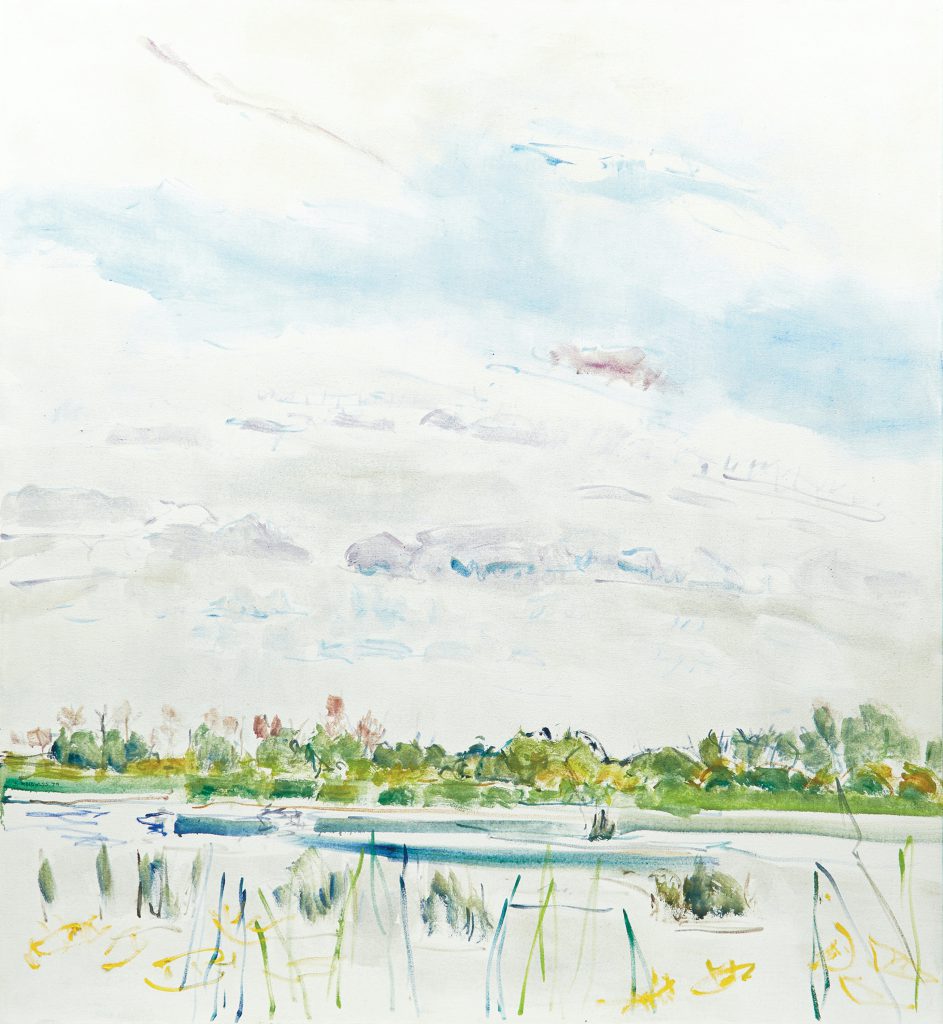
    Dorothy Knowles, Reeds (1979)

    Dorothy Knowles grew up on a farm overlooking a Prairie valley in Saskatchewan and initially had no plans to become a painter, studying biology at the University of Saskatchewan. At the time of her graduation, a friend persuaded her to enroll in a six-week summer course given by the University of Saskatchewan at Emma Lake, where Knowles found a proclivity for art. Her participation in the Emma Lake Workshops in the late 1940s through to the 1960s greatly influenced and encouraged her interest in landscape painting. 

    In the 1960s Knowles discovered the importance of working directly from nature, while also employing the use of sketches and photographs to finish her work in the studio. Her paintings capture the richness of the Prairie landscape through exploration of colour and texture. In “Reeds” (lot 71), Knowles transmits the diverse natural environment of the landscape. Often associated with paintings of expansive flat fields of wheat, Knowles brings a fresh approach to capturing her native landscape, exploring an impressionistic view of a diverse marshy landscape.

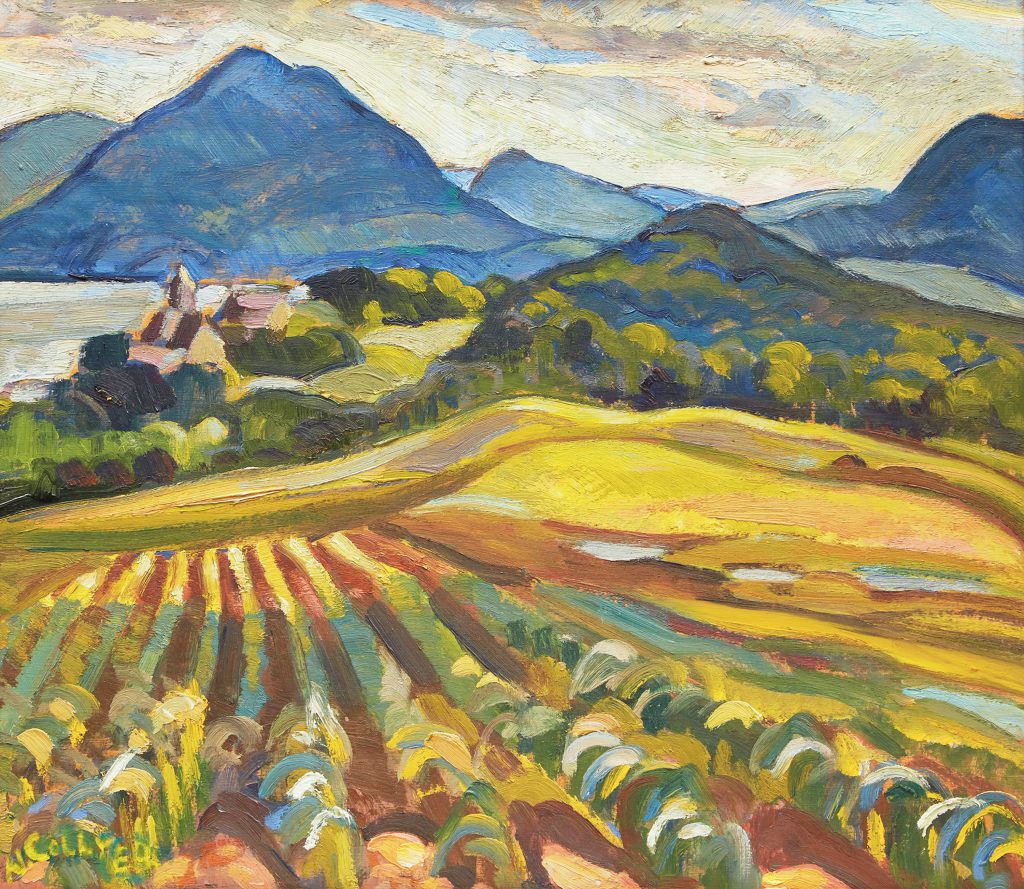
    Nora Collyer, Summer Landscape

    In 1921 Nora Collyer joined fellow Art Association of Montreal graduates at their studio at 305 Beaver Hill Hall. This association of artists called themselves the Beaver Hall Group. The three-story house offered the artists inexpensive studio space and a large room on the ground floor, which served as their exhibition gallery. The Beaver Hall group of modernist painters had a distinctive style rooted in the life and culture of Montreal and Quebec. 

    Growing up in Montreal with English Protestant parents, Collyer was imbued with a strong sense of community and gravitated towards depicting village landscapes and tokens of rural communities. With a richly composed foreground and a distant village depicted by the shore, “Summer Landscape” (lot 68) is executed with bold colour and rhythmic form, expressing her love of the region. 

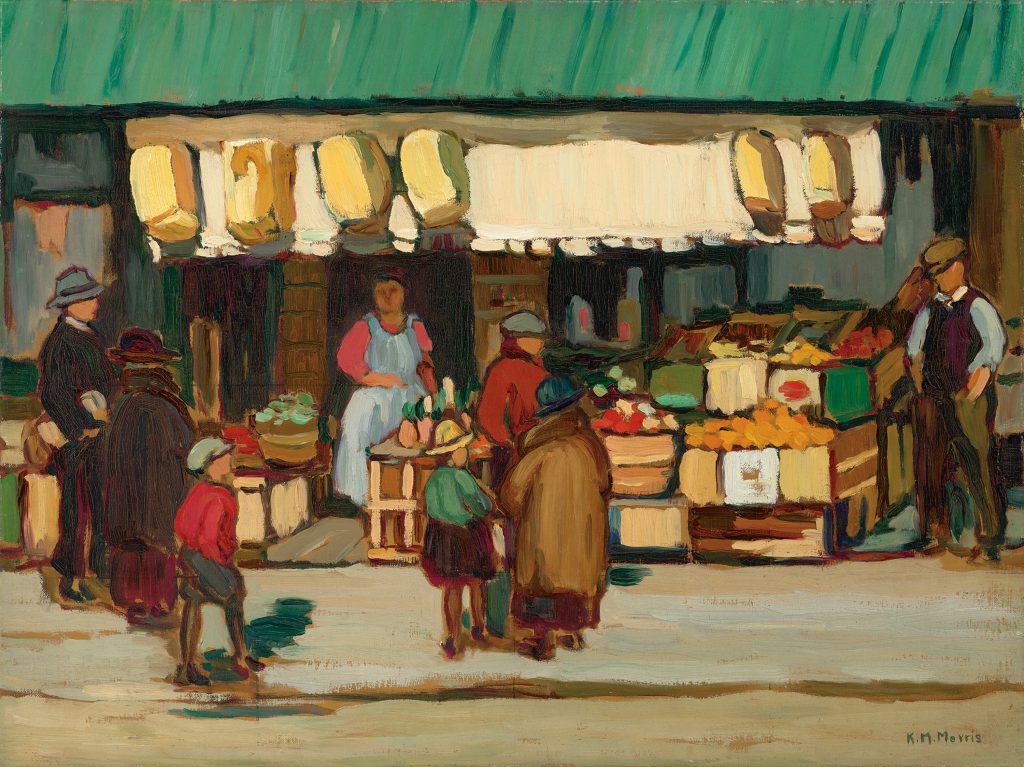
    Kathleen Morris, The Fruit Shop, Ottawa

    Kathleen Moir Morris studied under William Brymner and Maurice Cullen at the school of the Art Association of Montreal, and became a prominent member of the Beaver Hall Group in 1920. Working in oil, her subjects include landscape, genre, street and market scenes, as well as cabstands throughout Montreal and its environs. Morris was born with a physical disability, but refused to let it prevent her from painting outdoors in all seasons. After her father passed away in 1914, Morris moved to Ottawa with her mother a few years later, residing in a house on O’Connor Street from 1922 to 1929. The painter maintained an active presence in the Montreal art scene while living in Ottawa, continuing to participate in Beaver Hall exhibitions as well as those of the Canadian Group of Painters.

    Morris would have frequented the Byward Market, still a bustling and popular destination to this day. In “The Fruit Shop, Ottawa” (lot 17), she depicts the sun shining on a fruit stand, busy with market goers in stylish 1920s attire. The crates of produce are colourful and warmly lit, as is the teal awning framing the upper border of the composition. Morris chose a bright and modern palette, synonymous with her body of work and that of the Beaver Hall Group. She painted from sketches, in which she simplified the forms and applied colour in bold, thick patches, visible in the faceless figures and abstracted fruit and vegetables.

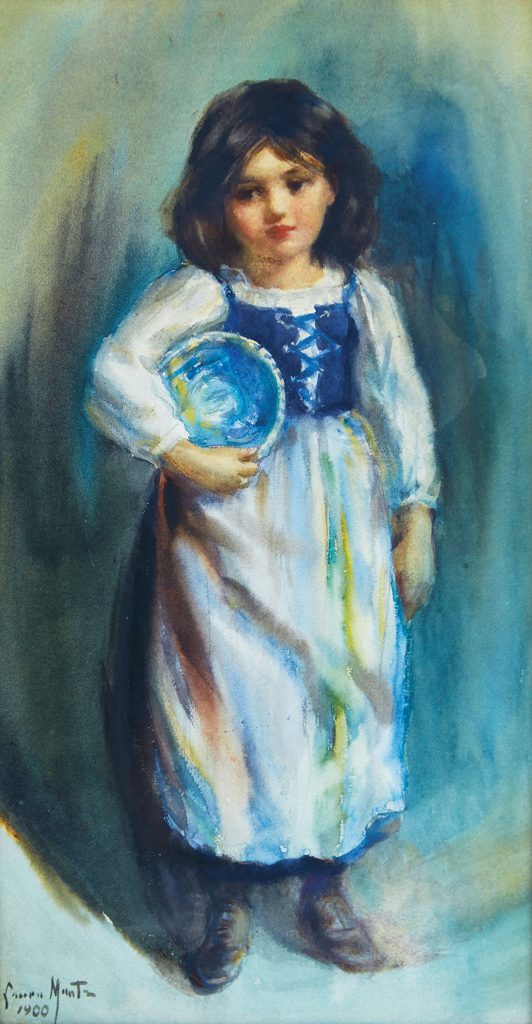
    Laura Muntz, The Handmaiden (1900)

    Laura Muntz, born in Warwickshire, England, and came to Canada as a child with her family to settle on a farm in the backwoods of the Muskoka District. She became a school teacher in Hamilton, Ontario, and in her spare hours took art classes. With money saved from her teaching job she studied for a short time at the South Kensington School of Art, England about 1887. She returned to Canada and spent the next seven years earning money for study in Paris at the Academie Colorossi. Muntz also travelled in Holland and Italy and at the end of seven years returned to Toronto and opened a studio. 

    Muntz was first exposed to the tenets of Impressionism while undertaking artistic training in Paris from 1891-1898. She then adopted the use of light and open, fluid brushwork in her own compositions. The rich tones of Muntz’s swift brushwork in “Girl with Blue Bowl” (lot 58) creates a sensation of gentleness and warmth, reflecting Muntz’s genuine interest in the aesthetic representation of children. Although sadly childless herself, Muntz lived a life surrounded by children. She was a schoolteacher upon moving to Canada, and later became the caregiver of her deceased sister’s eleven children. Muntz’s depiction of domestic scenes not only reveal a consistent study of her most treasured subjects, women and children, but illustrate the female experience of Canada in the late nineteenth and early twentieth centuries.

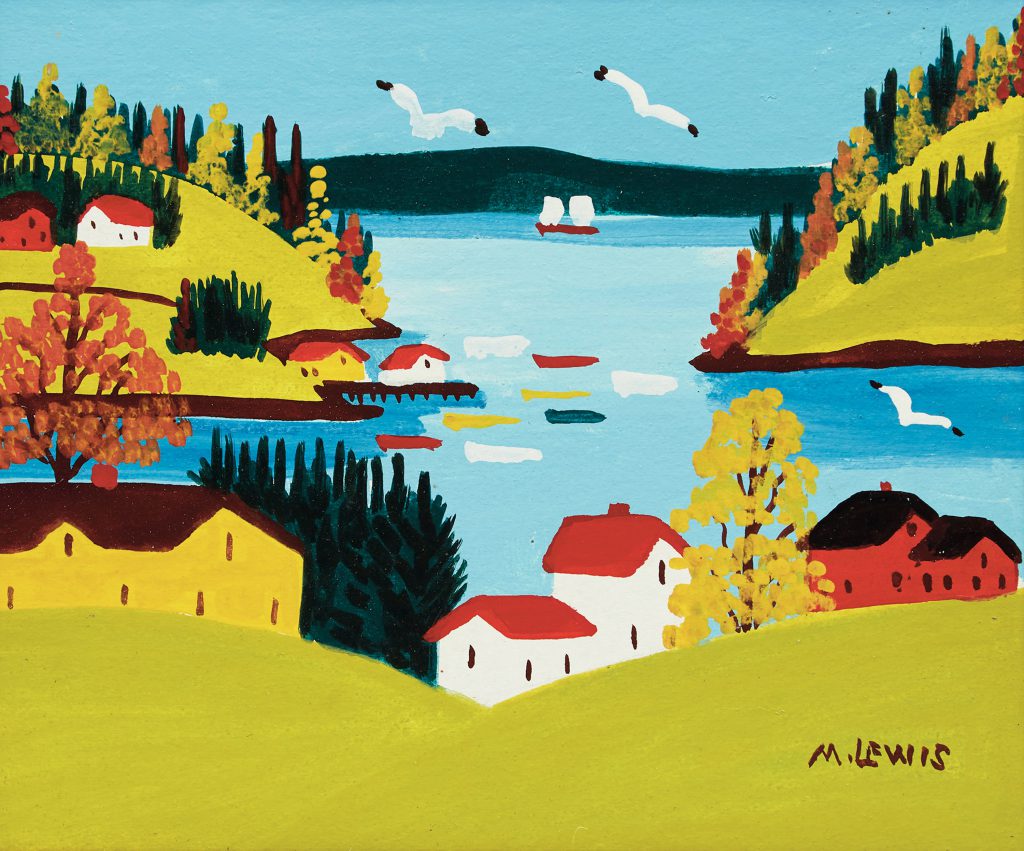
    Maud Lewis, Sandy Cove

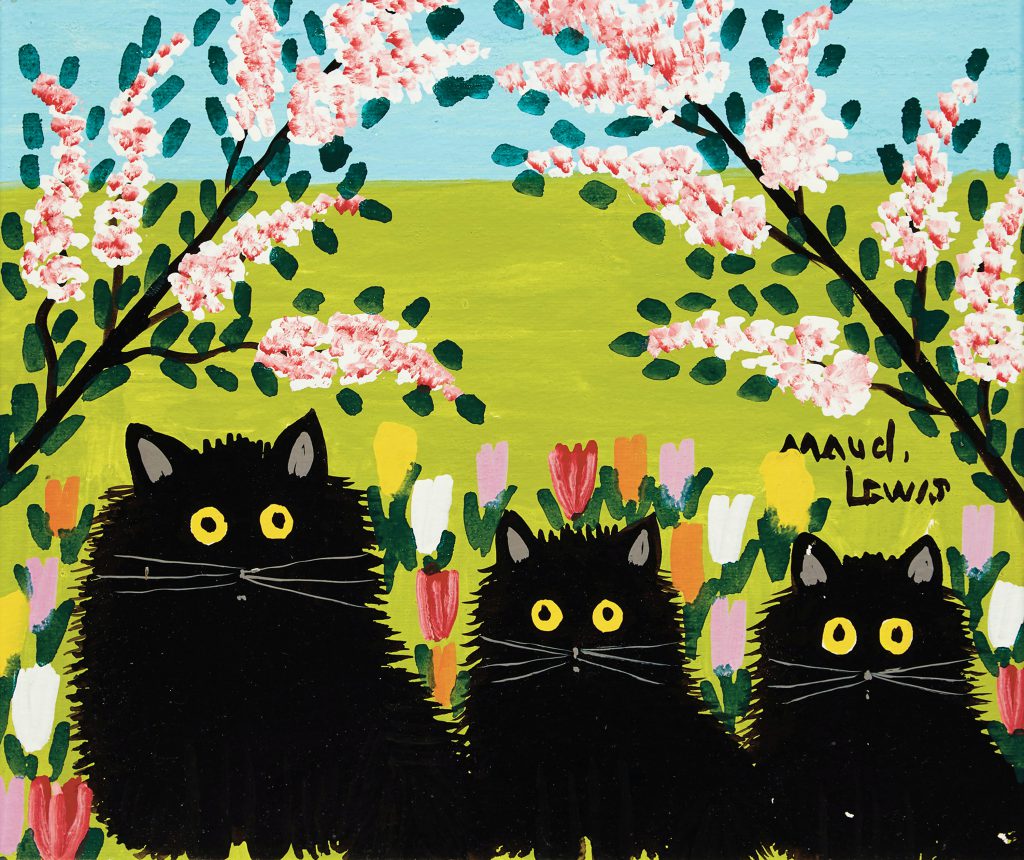
    Maud was born in South Ohio, a community near Yarmouth, Nova Scotia. Born disfigured with sloped shoulders and her chin resting on her chest, Maud led a confined but happy home life after she quit school at 14. Physical deformity may have been her lot, but even more tragic was the loss of both her parents within two years. Thankfully, an aunt who lived in Digby took her in. There she would later answer a newspaper ad that would determine the course of her life. A man named Everett Lewis wanted a housekeeper for his cottage in Marshalltown. She married him in 1938 at the age of thirty-four and would never travel more than an hour’s drive from her birthplace. Maud gathered images from her happy childhood and limited excursions in a Model T with Everett to paint cheerful images on dust pans, scallop shells and even on her house. They would settle into a routine where Everett enjoyed peddling and haggling over the paintings Maud would love to paint. The happiness she painted first attracted neighbours, then tourists and eventually even international attention. It started with a Star Weekly newspaper article and then a 1965 CBC Telescope program featuring her unique works. Her notoriety began to bloom and orders came in so fast that the paint hardly had time to dry. 

    Maud Lewis, Three Black Cats

    The simplicity of Maud Lewis’ paintings, brushed initially with scrounged paint from local fishermen onto ubiquitous green boards and postcards, continue to evoke feelings of innocence, of child-like exuberance as enduring as the spring times she loved to paint. Her works, such as “Three Black Cats” (lot 61) and “Sandy Cove” (lot 62) continue to capture audiences intrigued by everyday scenes as diverse as three black cats, hard-working oxen, whimsical butterflies and harbour scenes. 

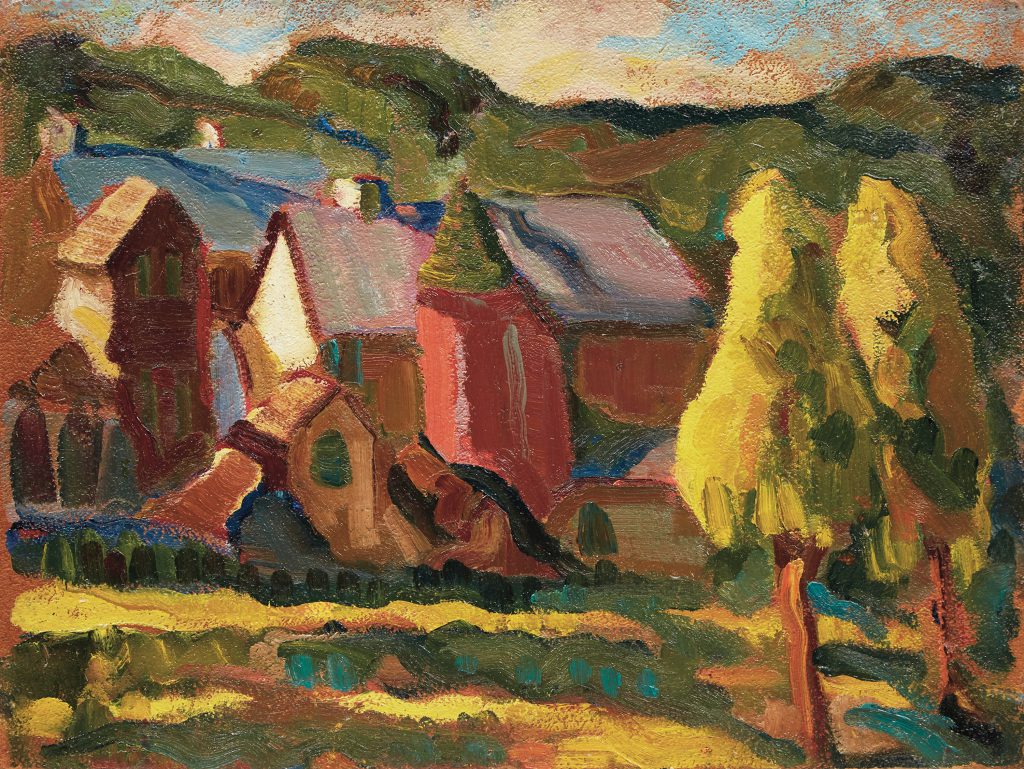
    Henrietta Mabel May, Farmstead, Eastern Townships

    Following studies at the Art Association of Montreal, Mabel May and fellow graduate, Emily Coonan, travelled to France to study. She and Coonan travelled widely in Europe, visiting galleries, museums and sketching, becoming a devote of the Impressionists. Upon her return to Montreal, and with her fellow AAM graduates, May helped establish the Beaver Hall Group in 1920, and in 1933 she became a founding member of the Canadian Group of Painters. 

    Embracing the francophone tradition of depicting inhabited landscapes, “Farmstead, Eastern Townships” (lot 65) showcases May’s ability to arrange colour to accentuate the weighty mass of the farm structures, while maintaining a sense of lightness in the warm colour palette. Bold strokes of red, ochre and chartreuse imbue the work with warmth, light and vibrancy, highlighting the beauty of the rural scene.

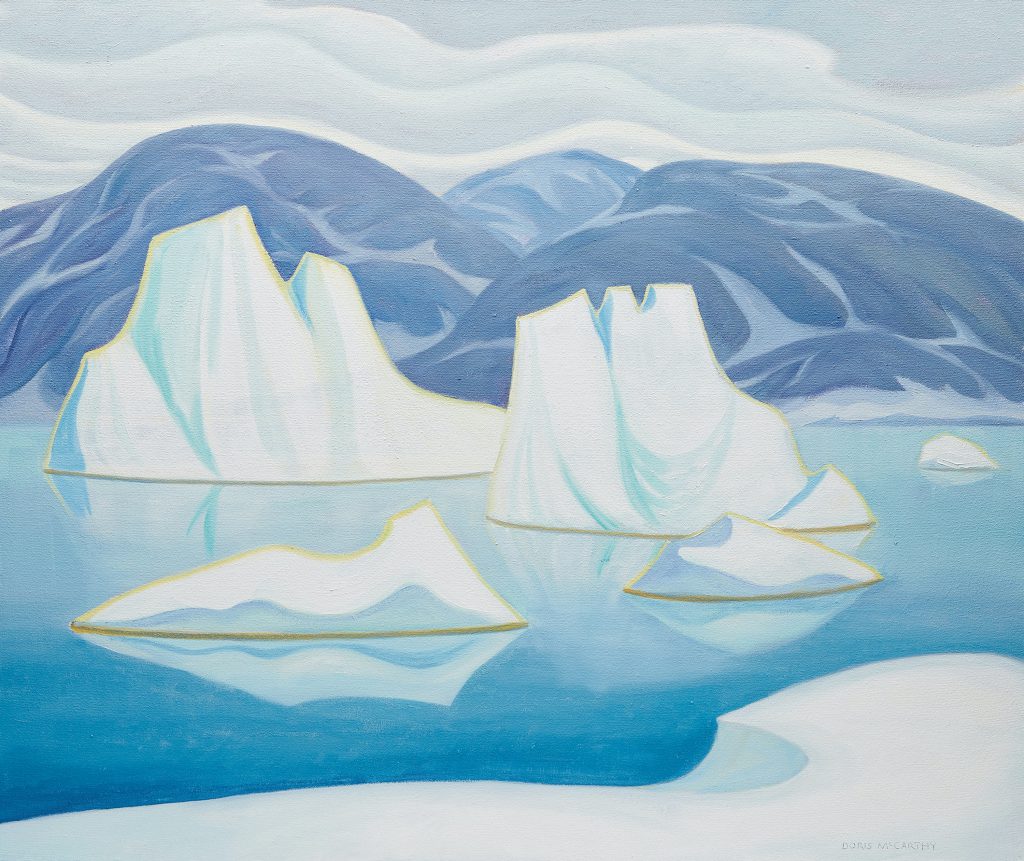
    Doris McCarthy, Iceberg & Floes (1998)

    Doris McCarthy – lot 8 and lot 87 images and cataloguing 

    Born in Calgary and raised in Toronto, Doris McCarthy is recognized as one of Canada’s foremost landscape painters. A teacher at both the Ontario College of Art and Central Technical School, McCarthy spent most of her life living and working in Scarborough, Ontario though she enjoyed many painting adventures across Canada and abroad. In some instances, McCarthy painted on site, and other times she took photographs to refer to later in her studio. 

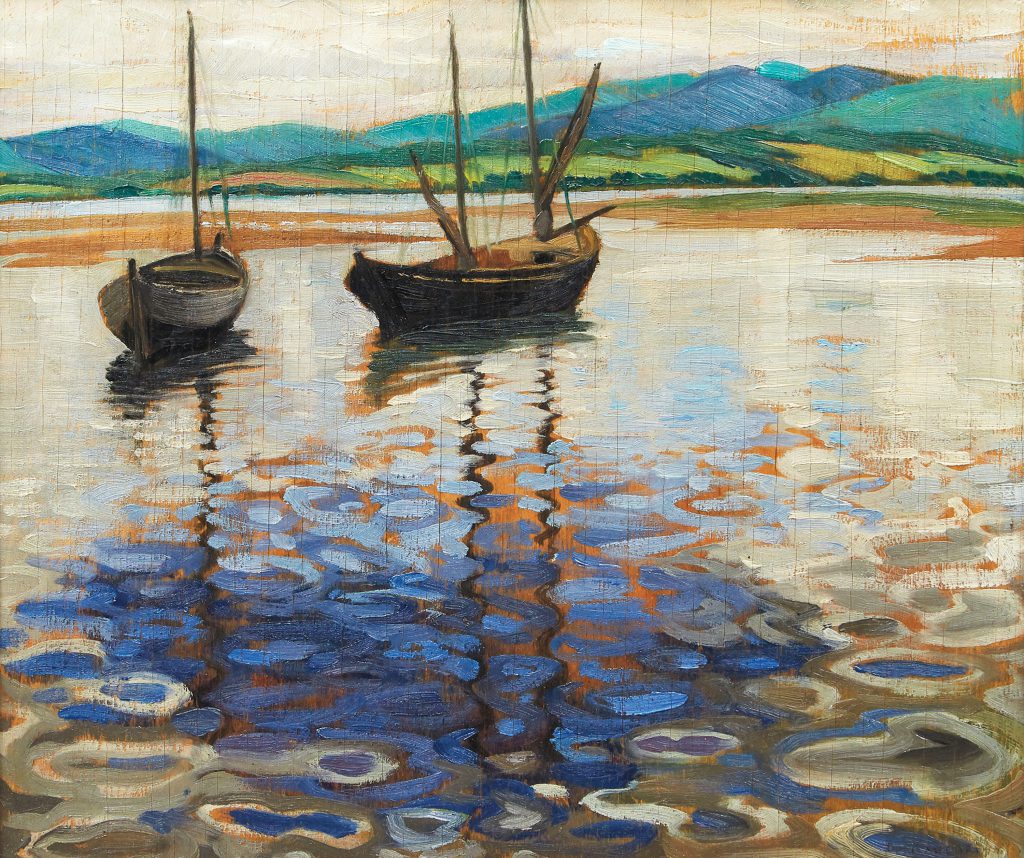
    Doris McCarthy, Two Boats at Barachois (1934)

    Painting mainly in oils and watercolours, McCarthy developed a personal style that was consistently praised for its vitality, boldness and skillful explorations of hard-edged angles, form and colour. “Two Boats at Barachois” (lot 87) demonstrates this confidence and the aptitude of McCarthy’s brush. McCarthy is probably best-known for her Canadian landscapes and her depictions of Arctic icebergs. In 1972, the year of her retirement from teaching, Doris made her first of many trips to the Canadian Arctic. McCarthy was fascinated with the topography of this territory and the new painting opportunities it provided her. Her paintings of icebergs and the Arctic landscape, including “Iceberg & Floes” (lot 8), are considered to be among the artist’s best known and most celebrated works. 

  • Harris, Milne, Tousignant & Perehudoff Highlight Spring Live Auction

    David Milne, Soft Hills (Misty Hill) (Boston Corners, N.Y.)

    Related work to Harris’ Record-Breaking Algoma sketch hits the Block with Masterworks by David Milne & Claude Tousignant debuting at Consignor Canadian Fine Art’s Spring Live Auction on May 28

    May 1, 2019 (Toronto, ON) – Lawren Harris rarely repeated subject matter, but the familiar depiction of Algoma, an island of tall trees, was a pivotal scene for the renowned Canadian artist, serving as the focus of several large-scale canvases. In 2016, Consignor Canadian Fine Art’s inaugural live auction event set the record for the highest-selling sketch of the Algoma region by Lawren Harris, fetching $977,500, tripling the previous auction record. Now, two new Harris sketches of the area will go on the auction block at Consignor’s Spring Live Auction of Important Canadian Art, taking place May 28 (7pm) at Toronto’s Gardiner Museum.

    Algoma Sketch XCII (Algoma Autumn), painted in 1920, marks an important place in Canadian art history, portraying the region where the Group of Seven embarked on their first sketching trips as an official association. The colourful oil sketch depicting a densely populated forest scene is being offered with an auction estimate of $150,000 to $250,000.

    Another of Harris’ works, Algoma, is a graphite drawing depicting the familiar island scene and serves as a related work for major canvases by the artist, including paintings at the Vancouver Art Gallery and the Boston Museum of Fine Arts. The graphite sketch has an estimated value of $15,000 to $20,000 but could exceed expectations based on the strong past performance at Consignor’s auctions of Harris’ graphite studies including the sale of Lake Superior in 2017 for $161,000, a record for a Harris work in this medium.

    “Lawren Harris’ work continues to captivate collectors and art enthusiasts across Canada and beyond our borders, and we are already witnessing a great deal of interest and excitement for the two Harris artworks included in our upcoming auction,” said Rob Cowley, President of Consignor Canadian Fine Art. “No matter the medium, Harris’ Algoma compositions are a fascinating display of the region and his development as one of our Canada’s most renowned artists. We are proud to have achieved record-breaking results for Harris’ work in oil and graphite over the past few years and are pleased to offer two works connected to such a pivotal area and period for Harris and the Group.”

    David Milne’s Soft Hills (Misty Hills) (Boston Corners, N.Y.), a masterful watercolour painted by the artist in 1917 also appears for the first time at auction at the May 28th evening sale. Composed shortly after Milne and his family moved to the small village of Boston Corners, watercolours from the region are considered to be some of Milne’s most iconic, this stunning work a perfect example, on offer with an auction estimate of $40,000 to 60,000.

    Other notable artworks featured in Consignor’s Spring Live Auction include:

    • Claude Tousignant, Absurdo (1964), 72” x 72”, a mesmerizing canvas by the celebrated Quebec abstractionist, recently on view at Calgary’s Mount Royal University (auction estimate $60,000 to 80,000)
    • William Perehudoff, AC-69-29 (1969), 63.5″ x 87.75″, a quintessential Colour-Field canvas, showcasing the unique voice of the Prairies abstract master.
    • William Kurelek, Tale of a Dog, 13.25” x 1.25”, mixed media on board, was gift from Kurelek to its current owner, a fellow framer and friend, is offered up for sale for the first time (auction estimate $7,000 to $9,000)
    • Tom Thomson, Road Near Leith, 8.25″ x 13.5″, a rare and early canvas by the famed Canadian landscape painter, depicting the area near his childhood home.

    The auction includes strong examples by many of Canada’s most important historical artists including the Group of Seven (A.Y. Jackson, J.E.H. MacDonald, Frederick Varley, Franklin Carmichael, Frank Johnston and Edwin Holgate), M.A. Suzor-Coté, and Robert Pilot, as well as renowned post-war and contemporary Canadian painters such as Jack Bush, Harold Town, Walter Yarwood, Ray Mead, Rita Letendre, Guido Molinari, Ken Lochhead, Sorel Etrog, Bill Reid, Robert Bateman, Maud Lewis and Joe Fafard, among others.

    Live previews are currently taking place at the Consignor Canadian Fine Art Gallery located at 326 Dundas Street West and viewable at consignor.ca. Consignor’s Spring Live Auction of Important Canadian Art will take place on Tuesday, May 28, 2019 at 7pm at the Gardiner Museum located at 111 Queen’s Park, Toronto, ON. The auction’s second session will be held online, with more than 150 works of art available for bidding between May 22 to June 5, 2019.