• Collecting Guide: Prints by International Artists

    For new collectors, prints can offer an accessible entry point to begin growing your art collection, offering works at more affordable prices.
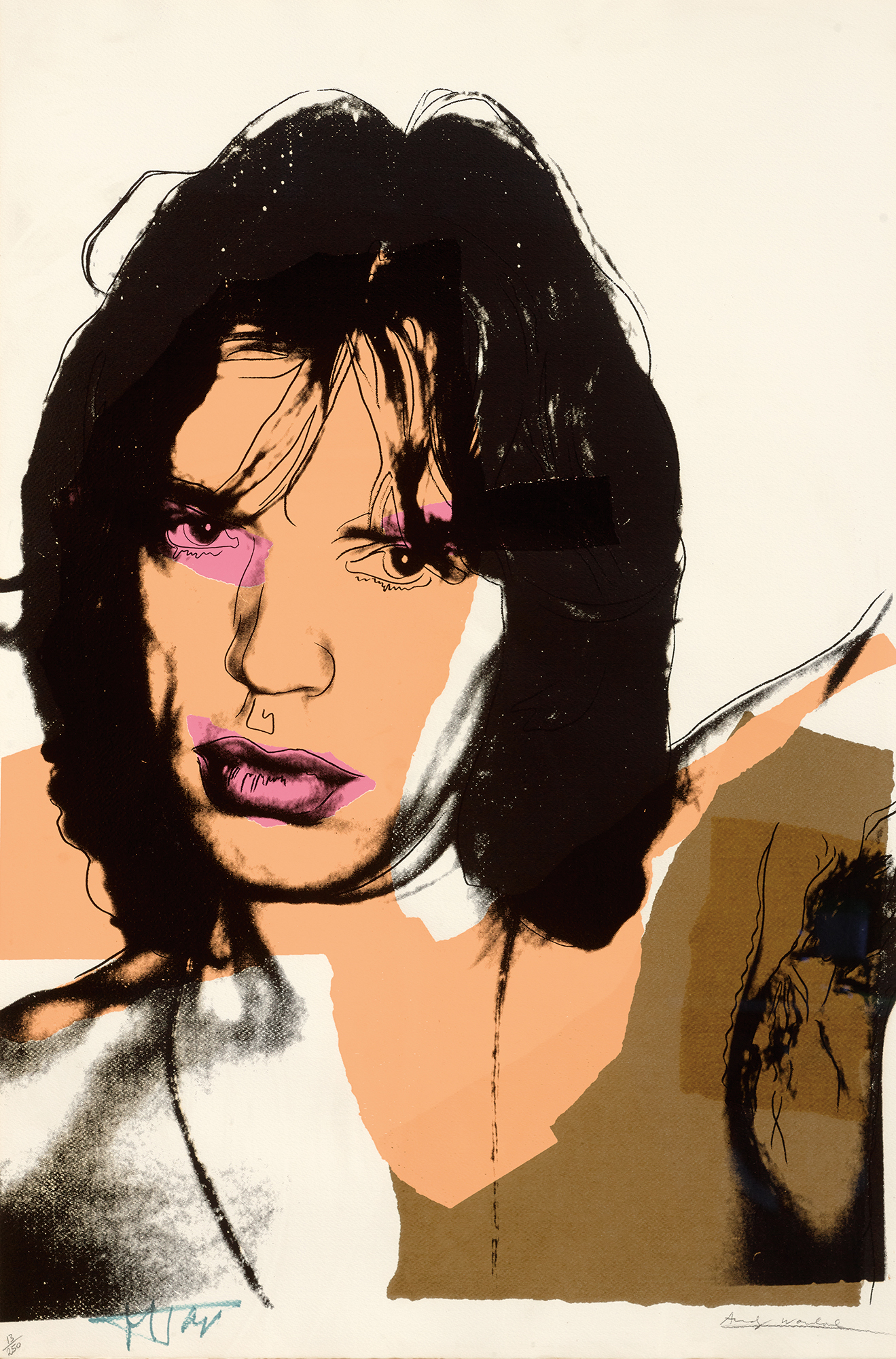
    Andy Warhol, Mick Jagger (F&S II.141). Colour screenprint on Arches aquarelle (rough) paper. Signed by the artist, numbered 13/250 and signed by Mick Jagger in the lower margin. Printed by Alexander Heinrici, New York. Published by Seabird Editions, London, England. Sold for $276,000

    1. What is a print?

    Prints are original artworks produced in limited numbers. They are often created under the artist’s supervision and in an edition. Prints and printmaking are broad terms used to describe:

    • Aquatint: An intaglio printmaking technique that creates tonal areas.
    • Drypoint: An intaglio printmaking technique that creates sharp lines with fuzzy edges.
    • Engraving: Incisions are made into a metal plate which retain the ink and form the printed image.
    • Etching: A printmaking technique using chemical action to produce incised lines in a metal printing plate, which holds the applied ink and forms the image.
    • Lithography: On a flat stone or metal plate, an image is created using a greasy substance that allows the ink to stick, while the non-image areas are treated to repel ink.
    • Mezzotint: An intaglio printmaking technique that creates soft gradations of tone.
    • Monoprint: A form of printmaking where the image can only be made once, making the technique closer to a drawing or painting. The term monoprint and monotype are used interchangeably.
    • Screenprint: A variety of stencil printing, using a screen made from fabric (silk or synthetic) stretched tightly over a frame. Also known as silkscreen and serigraphy.
    • Woodcut: A method of relief printing using a block of wood cut along the grain. The raised areas of the image are inked and printed, while the areas that have been cut away remain blank.
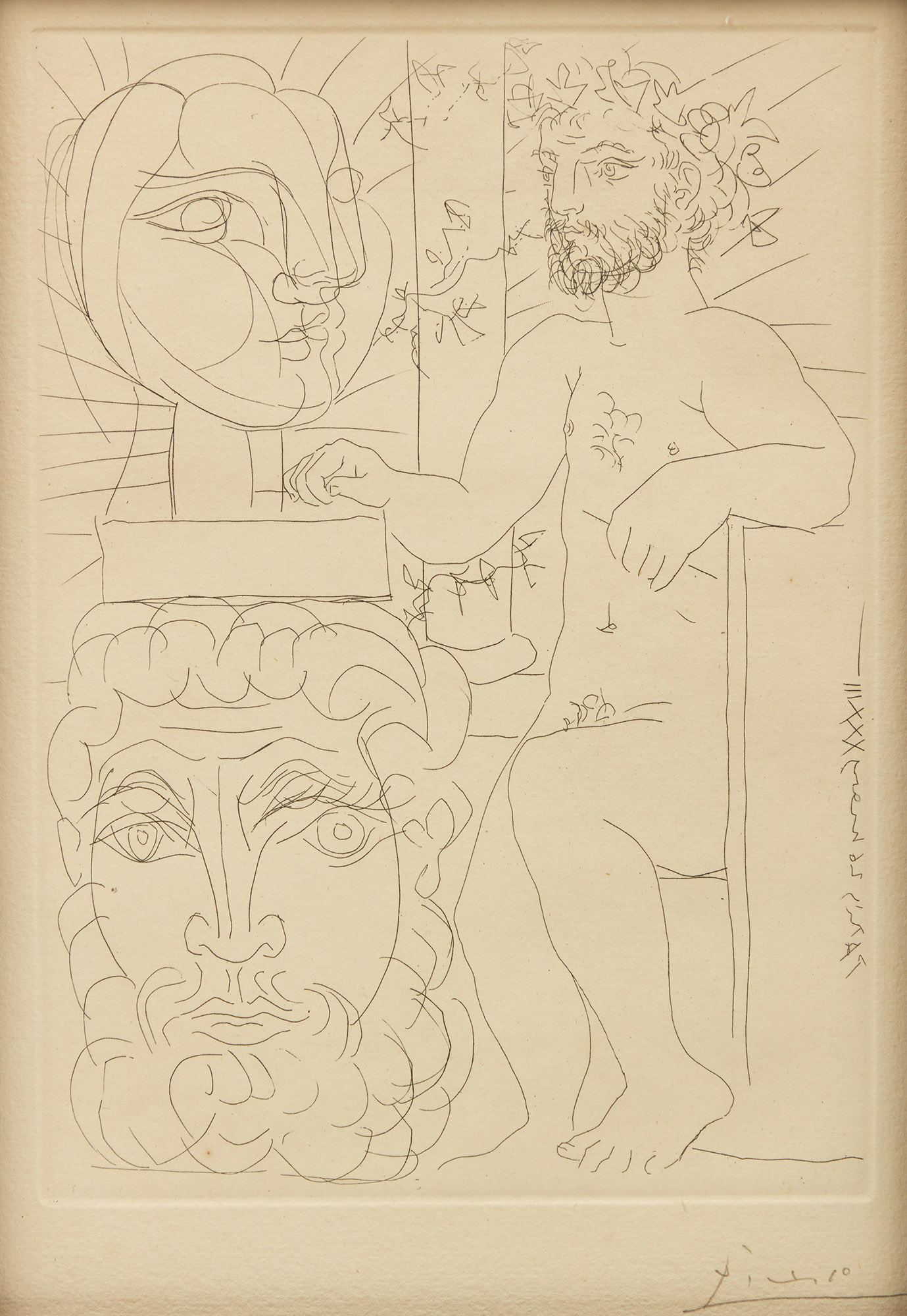
    Pablo Picasso, Sculpteur et deux têtes sculptées from the Vollard Suite (Bloch 157; Geiser 310 Bd). Etching signed lower margin. Sold for $9,600

    2. What are edition sizes and proofs?

    A print is a unique work produced in a limited edition, meaning only a specific number of impressions are made, and are usually signed by the artist. Each print is assigned an edition number, typically written as a fraction in the lower margin (for example: 25/50). The number on the left represents the individual print’s number, while the number on the right indicates the total size of the edition.

    The number of prints in an edition is key and limited edition prints are generally considered to be more valuable. The following abbreviations usually appear on works outside the numbered edition, such as:

    • A.P.: Artist’s Proof (or E.A. for épreuve d’artiste). Identical to the numbered edition and usually kept by the artist as a record of the print’s evolution.
    • P.P.: Printer’s Proof. Identical to the numbered edition and is an example for the printer or publisher the artist was collaborating with.
    • T.P.: Trial Proof. Used by artists and printers to see how the work is progressing before the official print run. 
    • E.P.: Experimental Proof. An experimental proof used by an artist as part of the creation process to be made into an edition.
    • C.P.: Color Proof. Used to test which colours best represent the artist’s intention.
    • H.C.: Hors Commerce, which translates to “not for sale”. These proofs were often intended for promotional use for galleries and dealers and are identical to the final edition.
    • B.A.T.: Bon à tirer, a French phrase meaning “good to pull”. It is the final proof reviewed by the artist before the edition is printed. There is generally only one B.A.T. and the printer relies on it so that the final edition is as the artist intended.
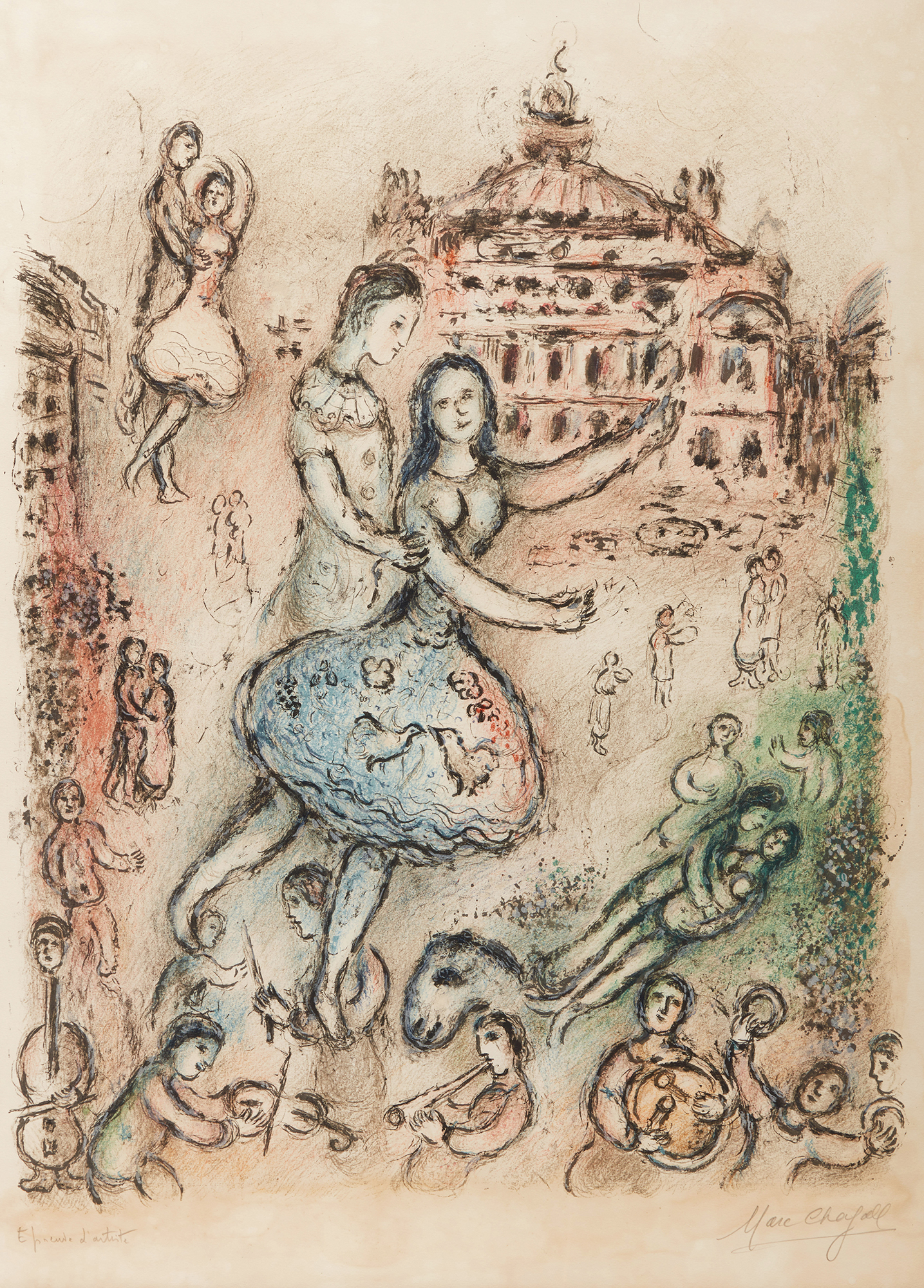
    Marc Chagall, L’Opéra (M. 715). Colour lithograph. Signed and inscribed “Épreuve d’artiste” in the lower margin. Sold for $31,200

    3. What are the different types of paper used in prints?

    In our catalogue description, specialists will indicate what type of paper a print is on and will mention if any watermarks are visible. Here are some examples:

    • Arches
    • BFK Rives
    • Hahnemühle
    • Japan nacre
    • Wove
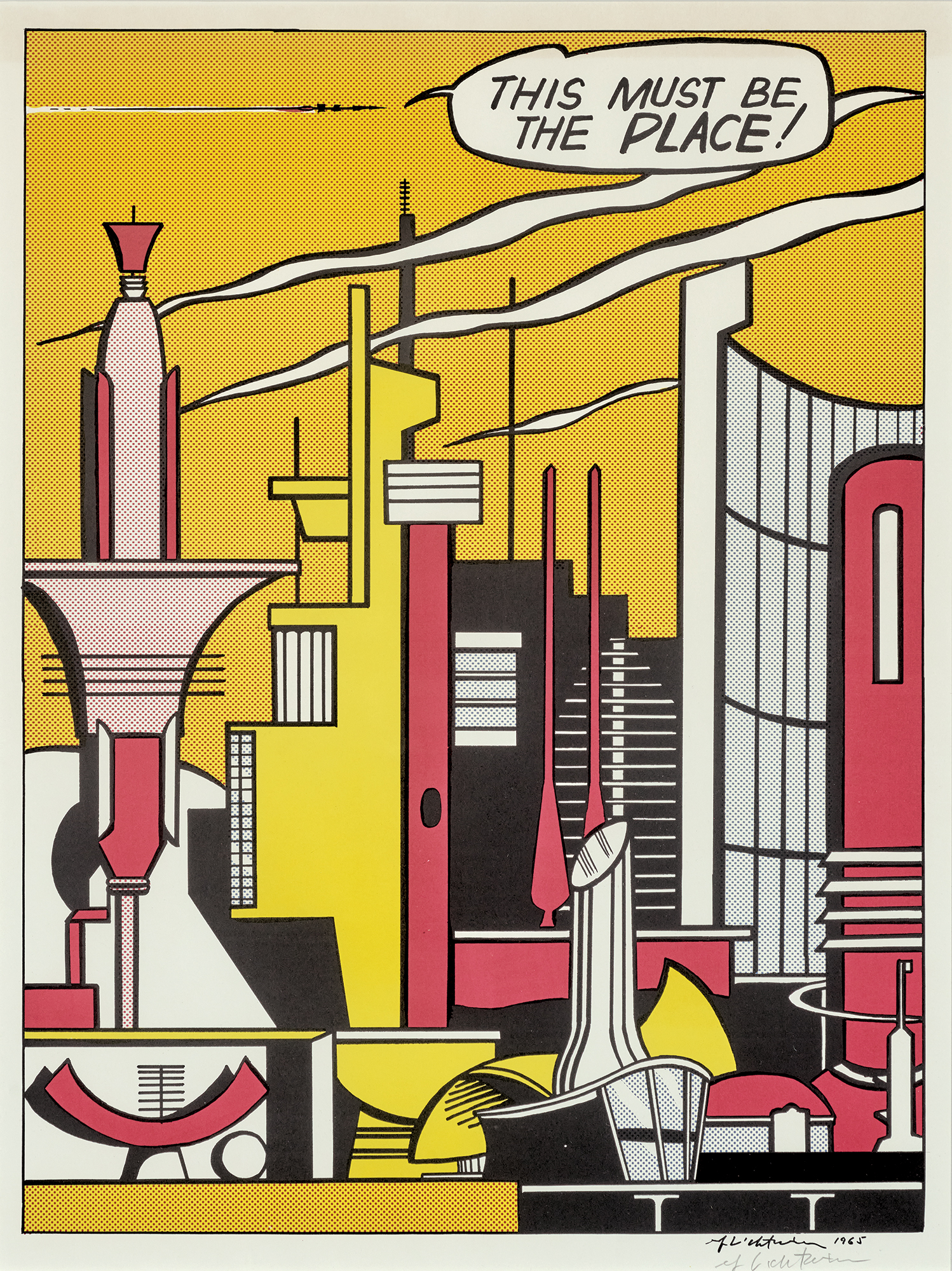
    Roy Lichtenstein, This Must Be the Place (Corlett III.20), 1965. Colour offset lithograph on wove paper printed signature, dated 1965 (as issued) and signed in the lower margin; titled and dated on a gallery label on the backing on the reverse. From an unknown edition size. Published by Leo Castelli Gallery, New York. Sold for $22,800

    The selection of paper is an important part of the printmaking process, which can influence the appearance of the printed image. For example, Roy Lichtenstein was known for using readily available paper, such as thin poster paper, and Andy Warhol similarly liked using inexpensive paper for his Soup Cans during the 1960s to emphasize that they were meant for everyone.

    4. Why are catalogue raisonnés important?

    A catalogue raisonné is a published collection of an artist’s complete works, listing each work with its title, date, and a description of its physical properties, such as medium, size and signature. The various editions are listed, along with the names of the printer and publisher.

    Consulting the catalogue raisonné of an artist is, therefore, a necessary step for any serious collector to confirm if a print is a genuine work or not.
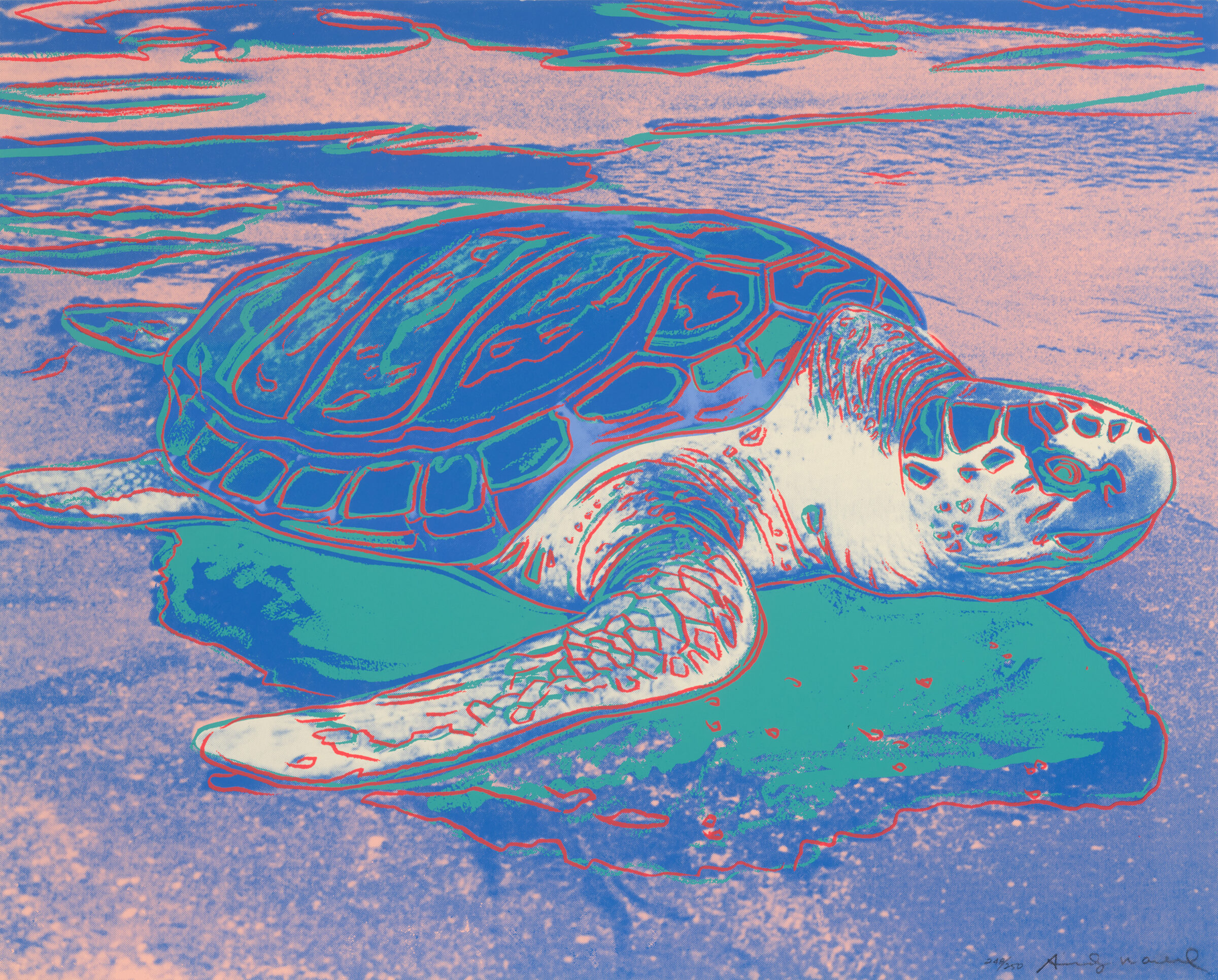
    Andy Warhol, Turtle (F&S II.360A), 1985 colour screenprint on Lenox Museum Board. Signed and numbered 248/250 lower right; titled and numbered on a label on the reverse. Printed by Rupert Jasen Smith, New York; published by CBS, Inc., Los Angeles, California. Sold for $114,000


    5. What are common condition issues to look out for?

    Beyond the authenticity of a print, a collector should always consider its condition before making a purchase as it will impact its value. The most common imperfections can include the following:

    • Creasing: An unintentional and permanent ridge or fold in the sheet of paper.
    • Fading: Loss of brightness or brilliance of colour in the image.
    • Foxing: Reddish-brown spots that appear on the paper due to water exposure or high levels of humidity.
    • Tearing: Damage to the paper where it has pulled apart, leaving ragged or irregular edges.
    • Trimming: An alteration of the size of a sheet, whether that be due to a condition issue or for framing. 
    • Yellowing: Alteration of a print that takes on a yellowish tint.

  • Features in Our June Online Auction

    Cowley Abbott’s June Online Auction features a plethora of captivating works, from the bold geometry of Roy Lichtenstein’s Pop Art to the meditative landscapes of Alexander Young Jackson and John William Beatty. These works celebrate the diversity of modern painting and the enduring legacy of artists who continue to shape our visual and cultural heritage. 

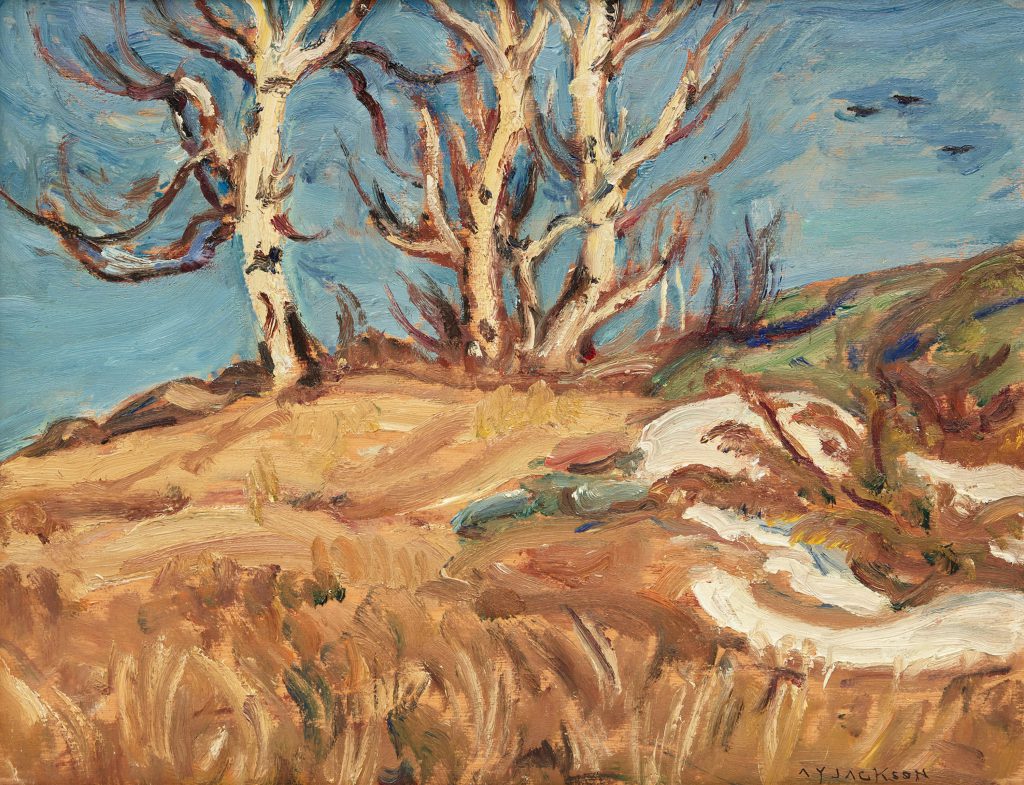
    Old Birch Trees by A.Y. Jackson

    A.Y. Jackson
    Old Birch Trees, Calabogie

    Alexander Young Jackson, a founding member of the Group of Seven, was born in Montreal in 1882. His early training in Paris exposed him to European Impressionism, which he later adapted to depict the Canadian landscape. Old Birch Trees is a poignant example of Jackson’s ability to capture the essence of the Canadian wilderness with sensitivity and precision. In this painting, Jackson portrays a cluster of birch trees, their white bark contracting against the surrounding foliage. The composition’s simplicity furthers the emotional depth of the painting, evoking a sense of solitude and reverence for nature.

    Beech Woods by John William Beatty

    John W. Beatty
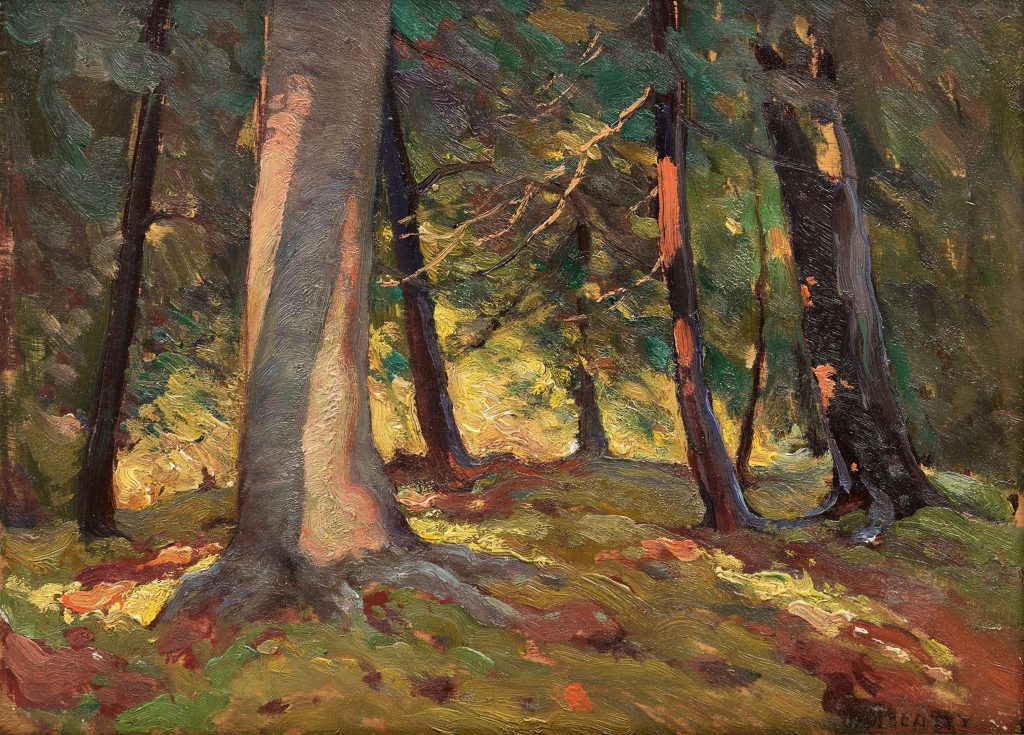
    Beech Woods, 1927

    John William Beatty, an English-born Canadian artist, was known for his detailed landscape paintings that often depicted the Ontario countryside. Born in 1869, Beaty’s work often features his meticulous attention to detail and a deep appreciation for the natural environment. Painted in 1927, Beech Woods showcases his ability to capture the tranquility of the Canadian landscape. In this piece, Beatty depicts a serene woodland scene with beech trees standing tall amidst a carpet of fallen leaves. The soft interplay of light filtering through the canopy creates a peaceful ambiance, inviting viewers to pause and reflect and Beatty’s precise brushwork and subtle colour palette enhance the painting’s sense of realism. 

    White Breaking by Jack Leonard Shadbolt

    Jack Shadbolt
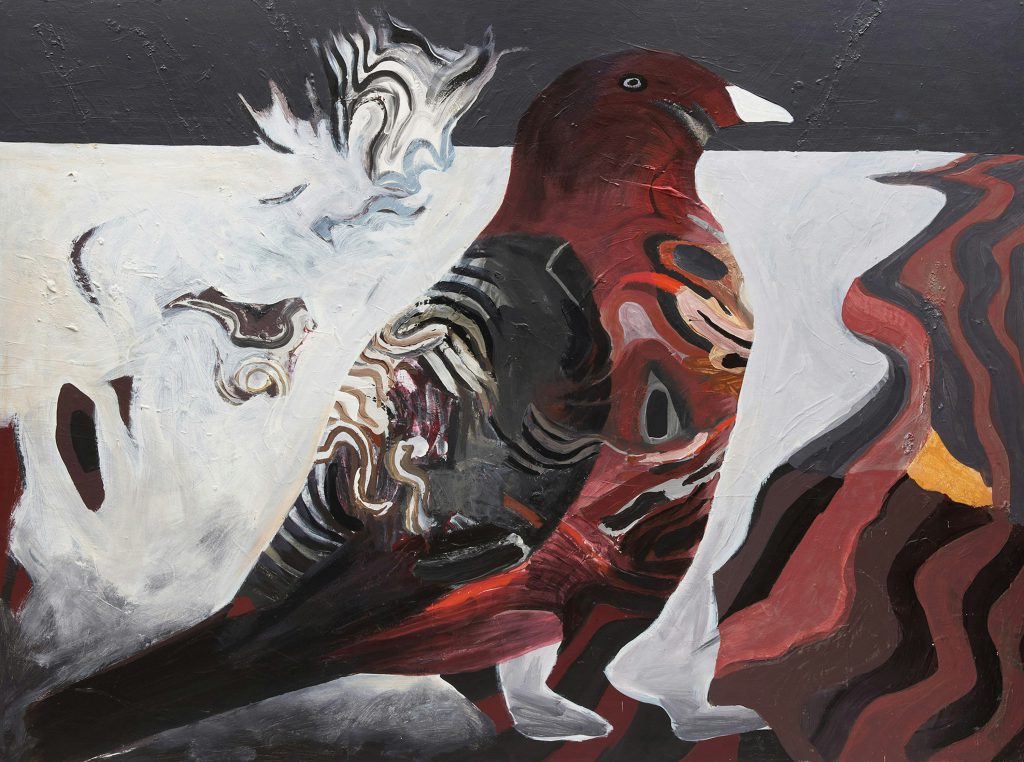
    White Breaking, 1965

    Jack Leonard Shadbolt, a Canadian painter and printmaker, was born in 1909 in England and immigrated to Canada in 1911. His early exposure to European modernism influenced his development as an artist. White Breaking, painted in 1965, is a powerful example of Shadbolt’s abstract expressionist style. The painting features a stark contrast between white and dark tones, creating a sense of tension within the work. Shadbolt’s use of bold brushstrokes and layered textures conveys energy which is reflected in his interest in the emotional human experience. The title, White Breaking, suggests a moment of rupture of transformation and invites the viewer to stop and think about the Shadbolt’s intended meaning. 

    Waiting by Max Weber

    Max Weber
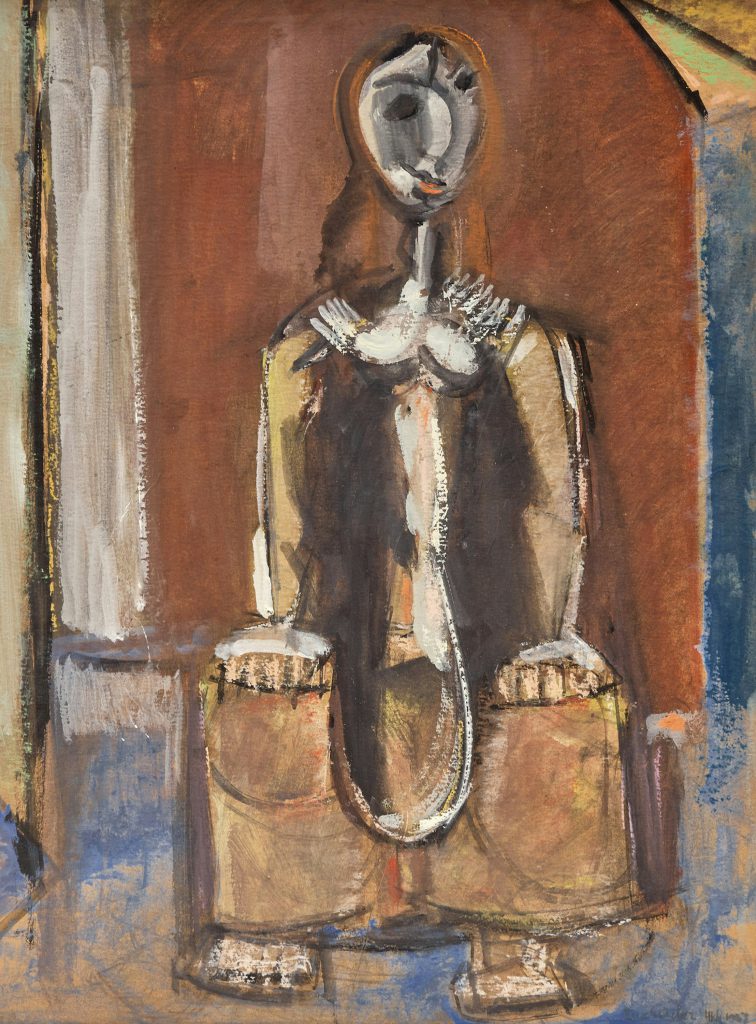
    Waiting

    Max Weber, a pivotal figure in early 20th-century American modernism, was born in Russia to Jewish parents and immigrated to the United States as a child. Trained at the National Academy of Design and influenced by modernism, Weber’s expressive abstraction bridged European influences and American sensibilities. In Waiting (1957), Weber uses both watercolour and gouache to convey a poignant moment of anticipation. The composition’s angular lines and overlapping shapes suggest a fusion of the figure with its environment, playing with the relationship between subject and environment.  The work reflects Weber’s interest in the psychology of the human experience and capturing a moment of stillness before action. 

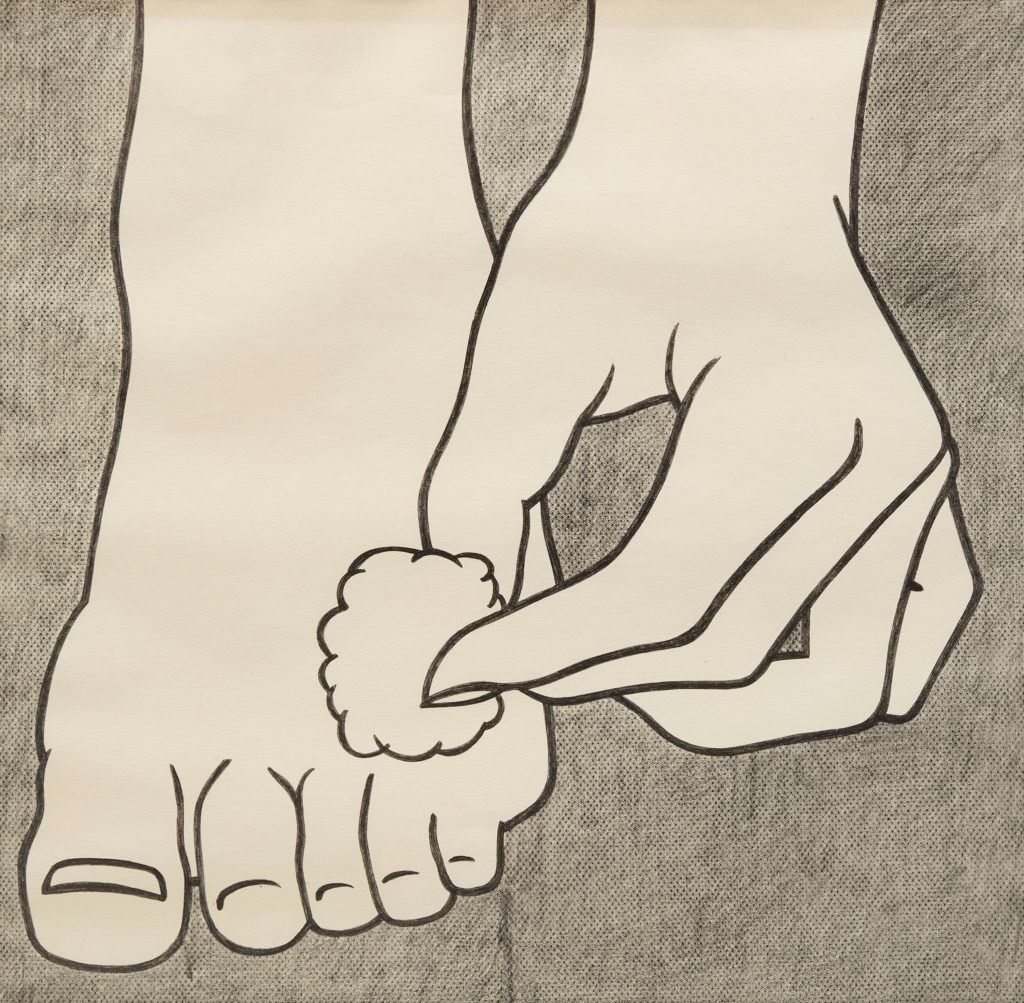
    Foot Medication Poster (Corlett App. 3) by Roy Lichtenstein

    Roy Lichtenstein
    Foot Medication Poster (Corlett App. 3)

    A leading figure in the Pop Art movement, Roy Lichtenstein, was born in New York City in 1923. Initially trained as a commercial artist, Lichtenstein’s work often drew from the visual language of advertising, comic strips, and mass media. His 1963 lithograph, Foot Medication Poster (Corlett App. 3), exemplifies his signature style – bold lines, flat colours, and a satirical take on consumer culture. This piece was created as a promotional poster for an exhibition at Leo Castelli Gallery, featuring works by other prominent artists of the time. The image depicts a hand applying medication to a foot, rendered in Lichtenstein’s Ben-Day dots and graphic precision. The subject matter of a mundane and everyday action elevates the ordinary to the level of high art, challenging traditional notions of what constitutes worthy subject matter.

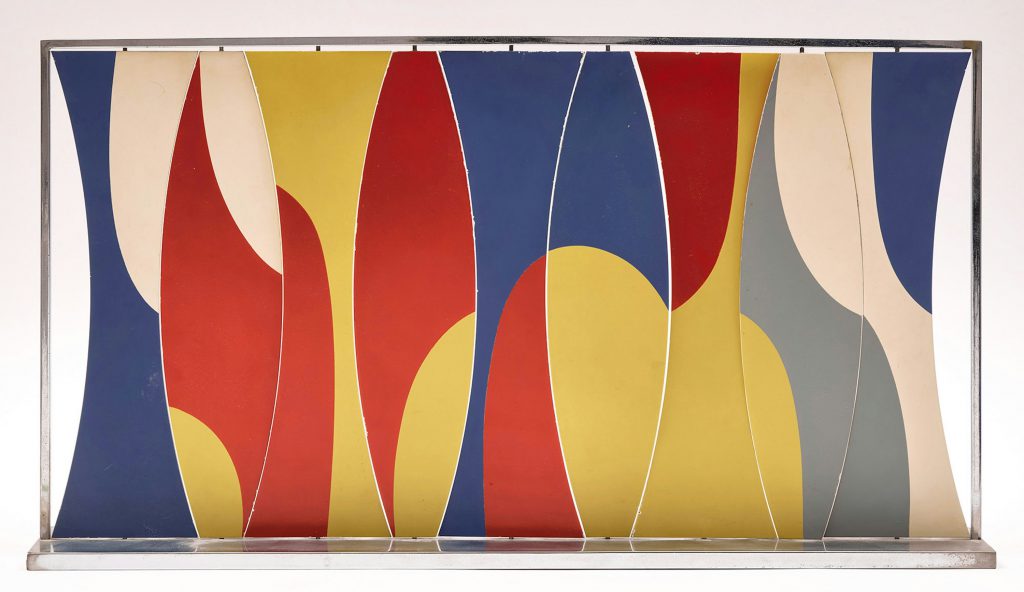
    Perforated Space Divider Screen Maquette by Herbert Bayer

    Herbert Bayer, an Austrian-American artist and designer, was a prominent member of the Bauhaus school, known for its integration of art, design, and architecture. Born in 1900 in Austria, Bayer’s work spanned various media, including graphic design, typography, and industrial design. His Perforated Space Divider Screen Maquette is a testament to his innovative approach to spatial design. This maquette represents Bayer’s exploration of modular design principles, aiming to create flexible and functional spaces within architectural environments.  The perforated screen design allows for light and air to pass through, showing the dynamic between solid forms and the void-like background. It reflects Bayer’s belief in the functional integration of art and design, where aesthetics serve both form and purpose. 


  • Post-War Canadian Art Spring Live Auction Results

    Our nation’s post-war artists were on strong display during the May 28th spring live auction with Cowley Abbott featuring paintings and sculpture by artists from across Canada that dazzled collectors during weeks of previews in Calgary and Toronto. The excitement during the viewings carried to sale night as rapid bidding carried prices well within estimate and, in several instances, beyond the high-end of expectation.

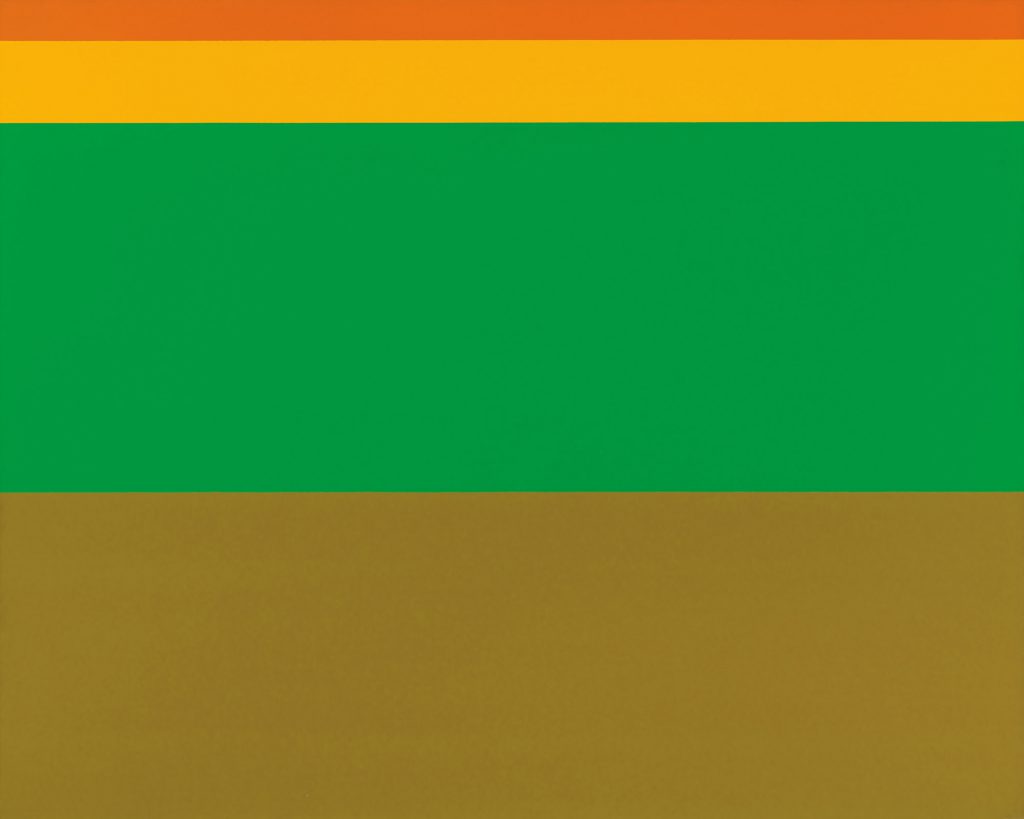
    Yves Gaucher
    Ocres, jaune et vert, 1974
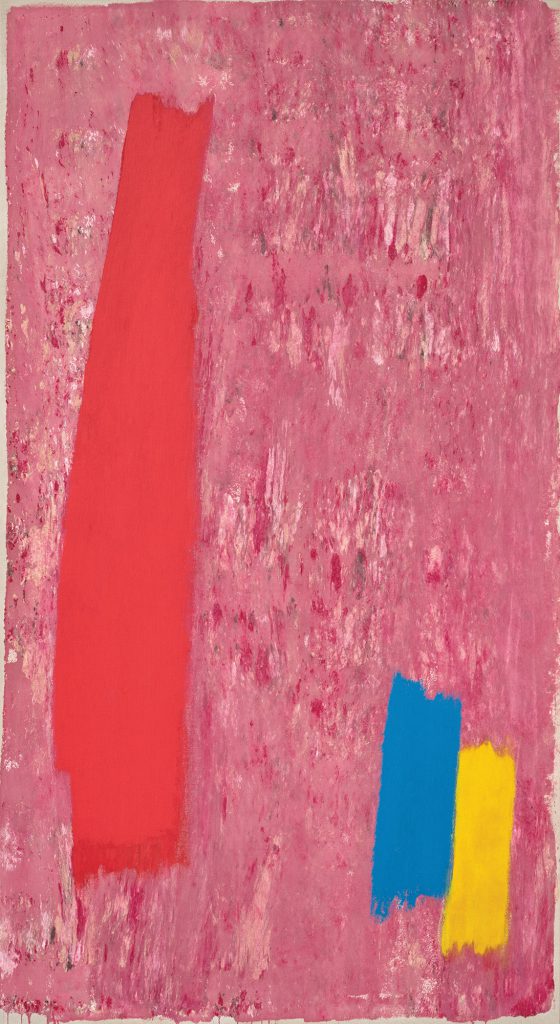
    Jack Bush
    Vic Day, 1974
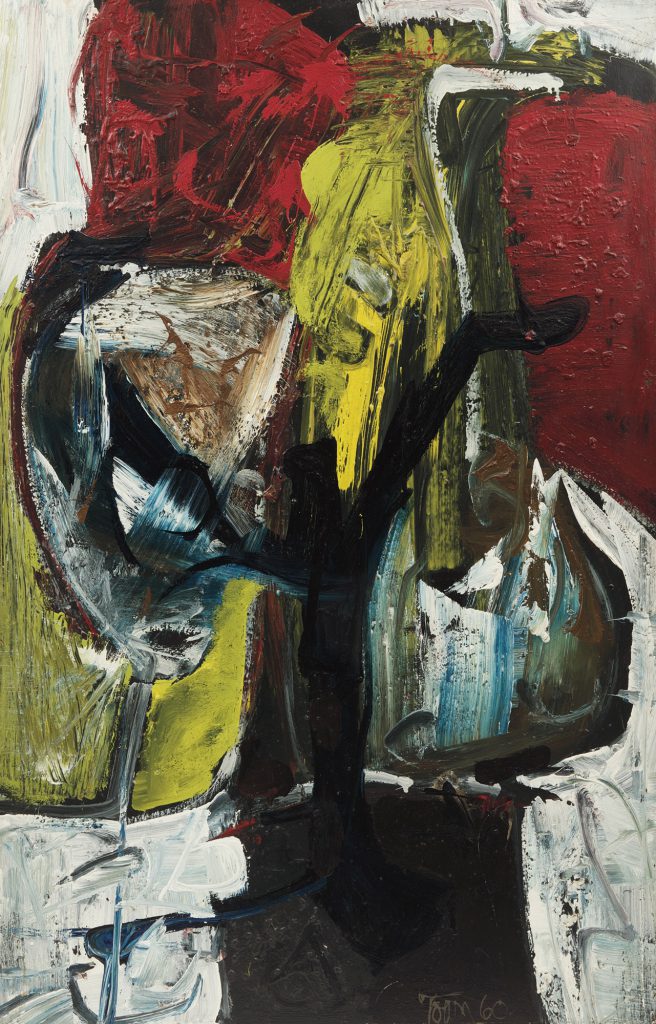
    Harold Town
    Spector, 1960
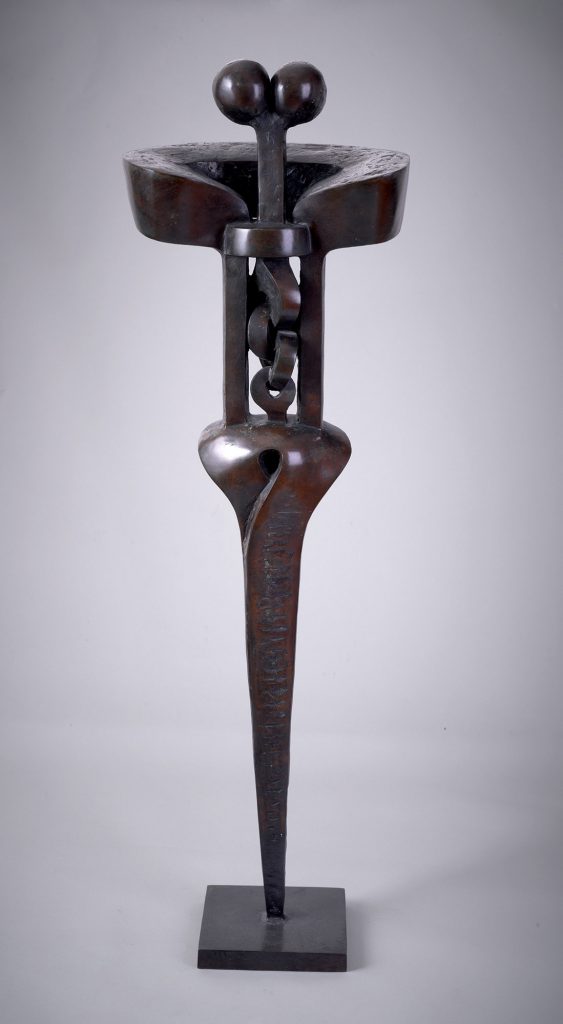
    Sorel Etrog
    High Society, 1964
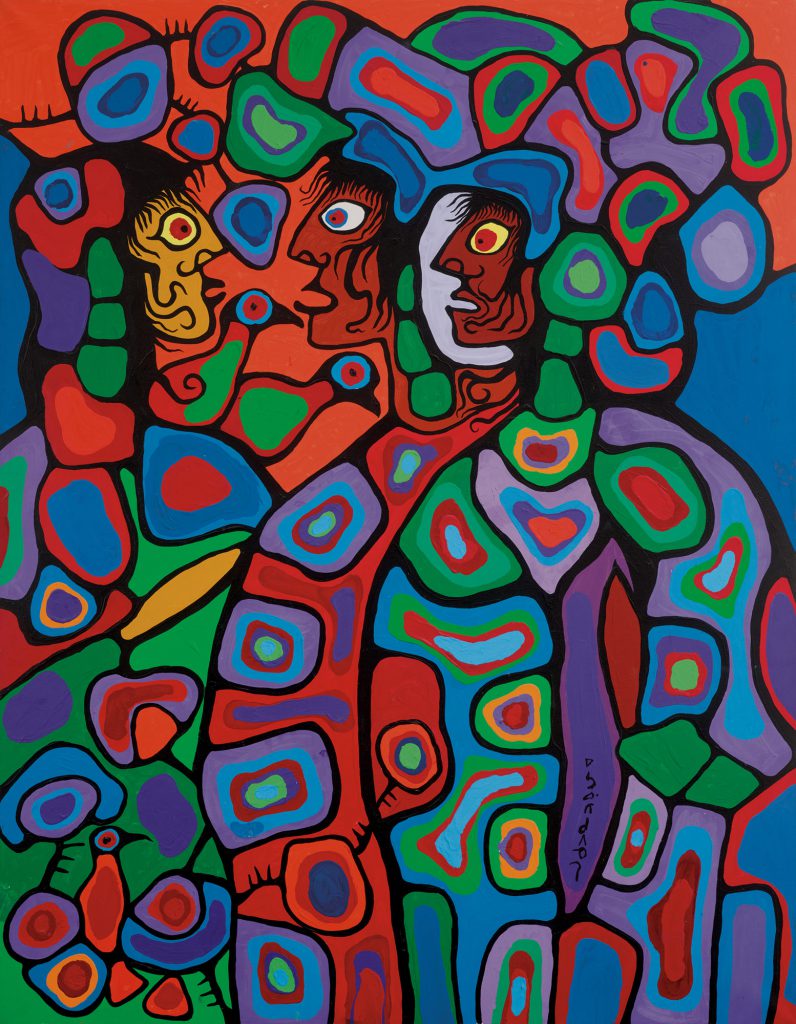
    Norval Morrisseau
    Conversation with Our White Brother, 1980
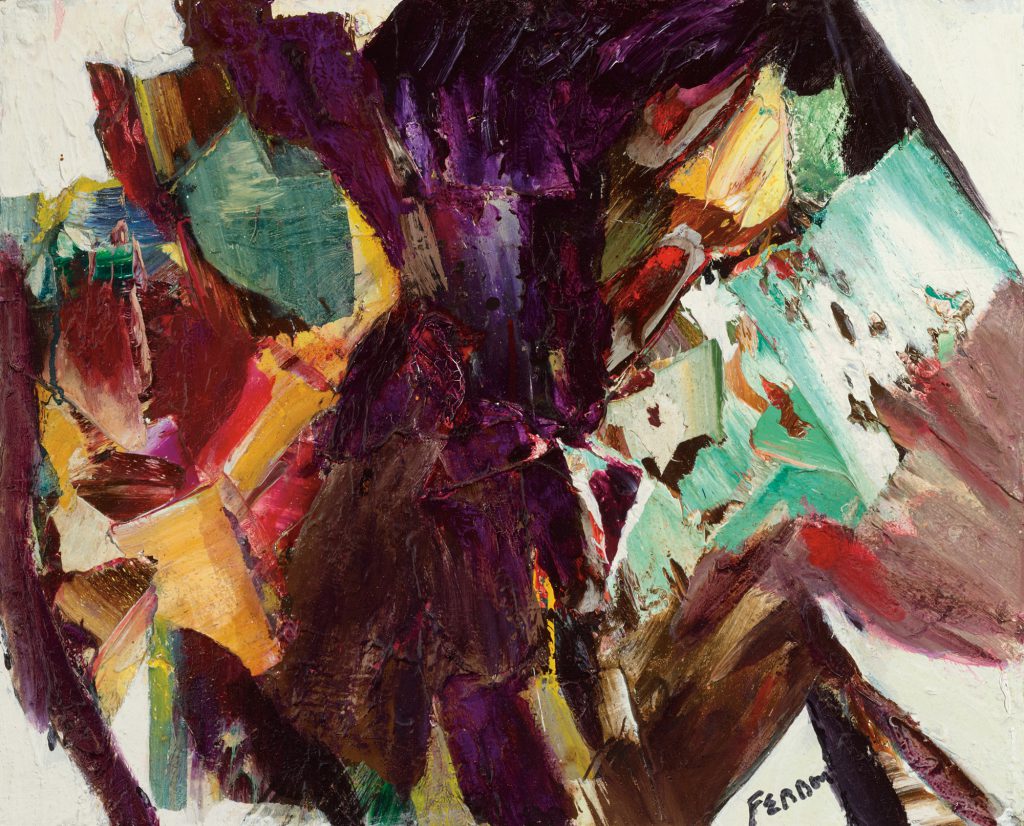
    Marcelle Ferron
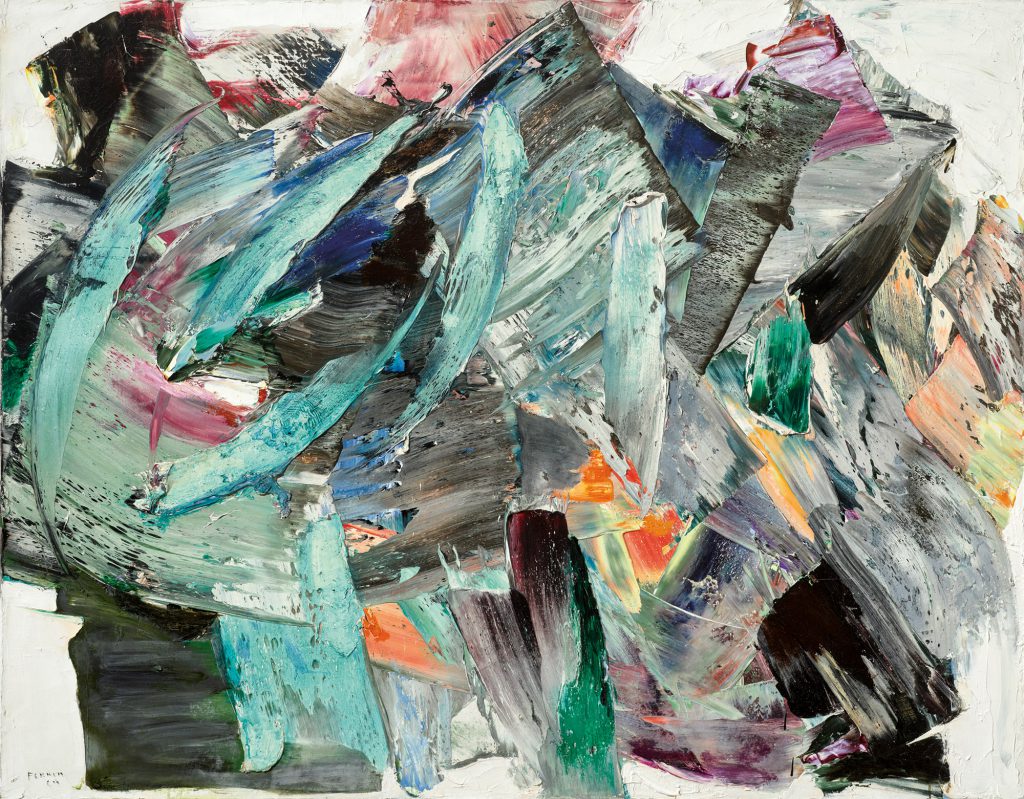
    Sans titre, 1962

  • Historical Canadian Art Spring Live Auction

    This season, Cowley Abbott’s offerings of early Canadian paintings and works on paper provided collectors the opportunity to bid upon examples that represented our country’s creators starting from Confederation. These examples excited collectors throughout our previews and drove bidders to raise their paddles high (in the auction gallery, on the telephone and online), pressing several of the works of art to exceed pre-sale expectation. 

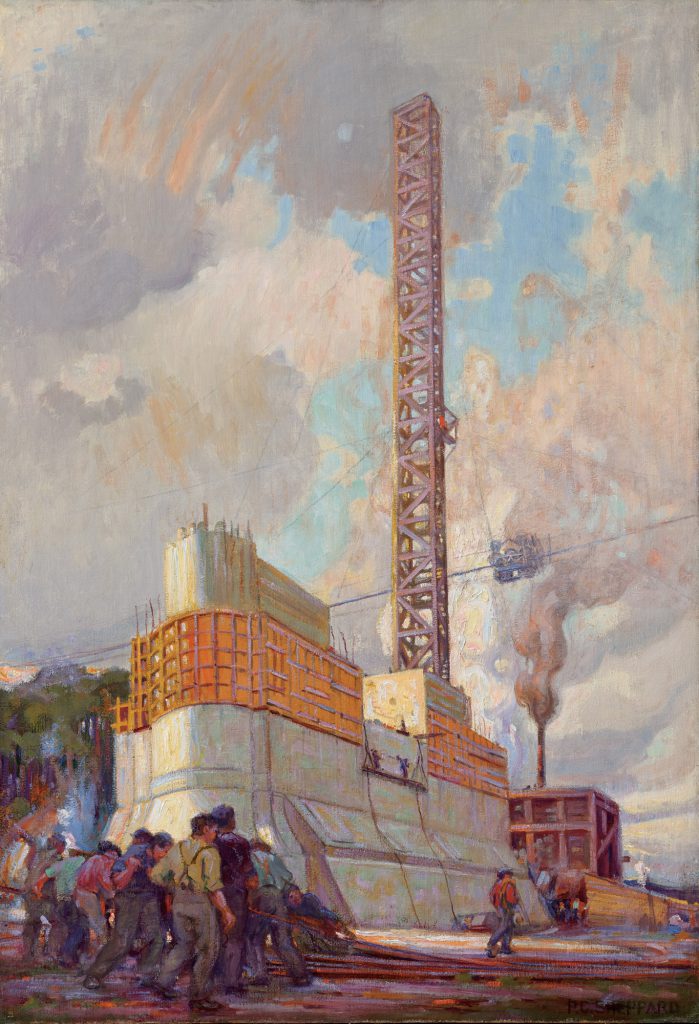
    P.C. Sheppard
    The Bridge Builders, Construction, Bloor Street Viaduct, 1915
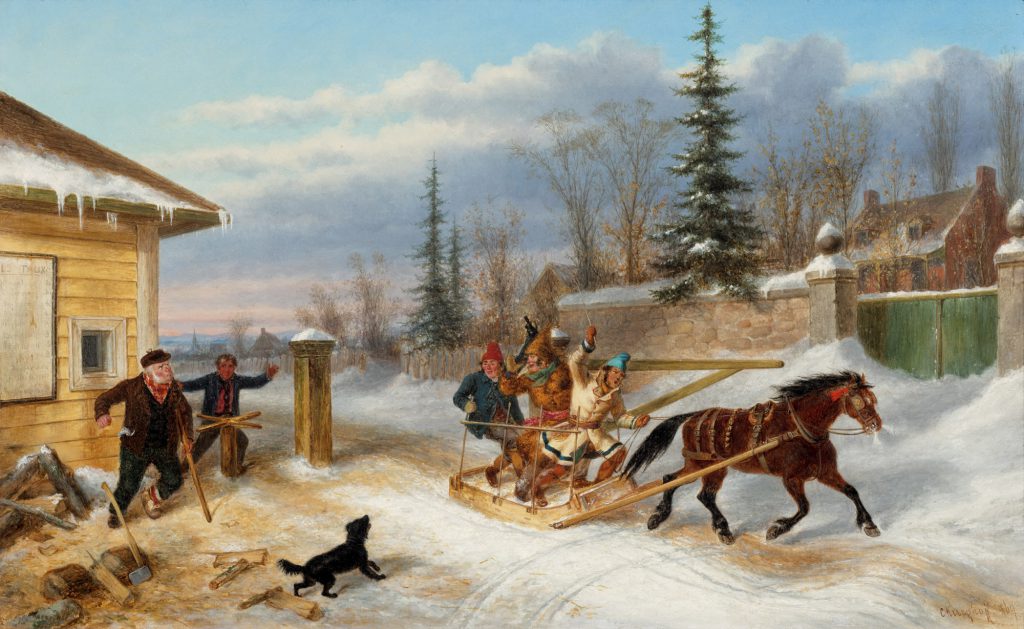
    Cornelius Krieghoff
    Bilking the Toll Gate, 1869
    James Wilson Morrice
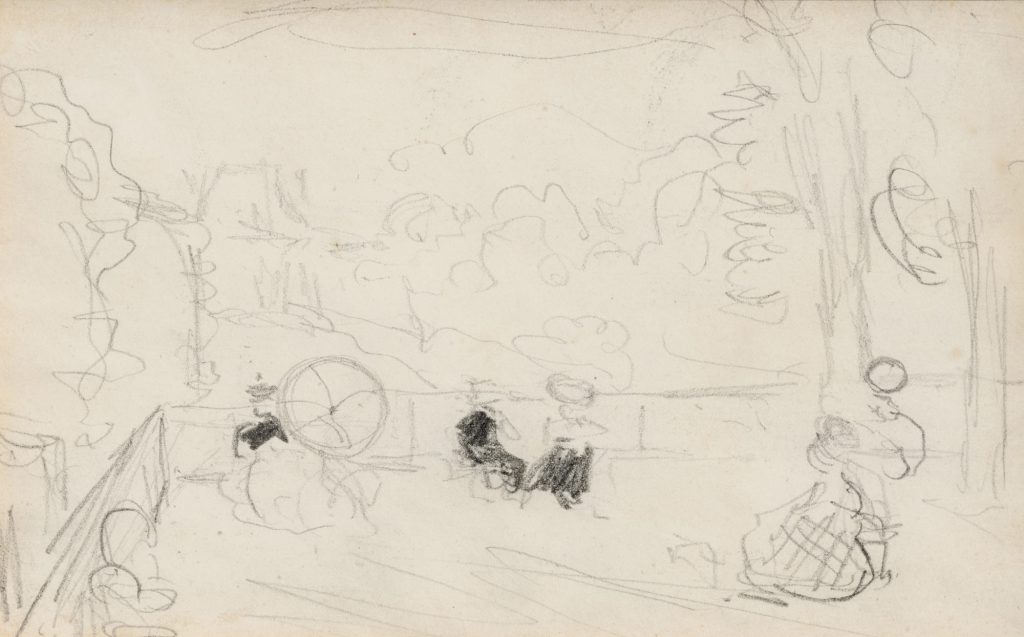
    On the Terrace, circa 1898
    Frances Anne Hopkins
    Lumber Raft on the Ottawa, 1886
    David Milne
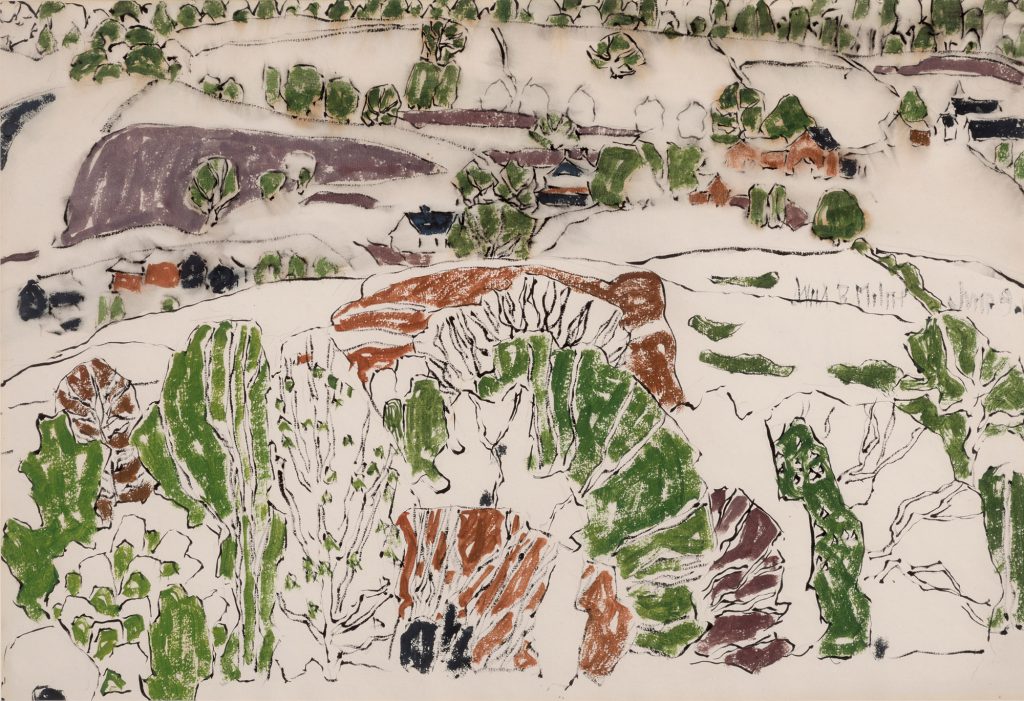
    Green and Brown, Boston Corners, 1917

  • Women Artists Spring Live Auction Results

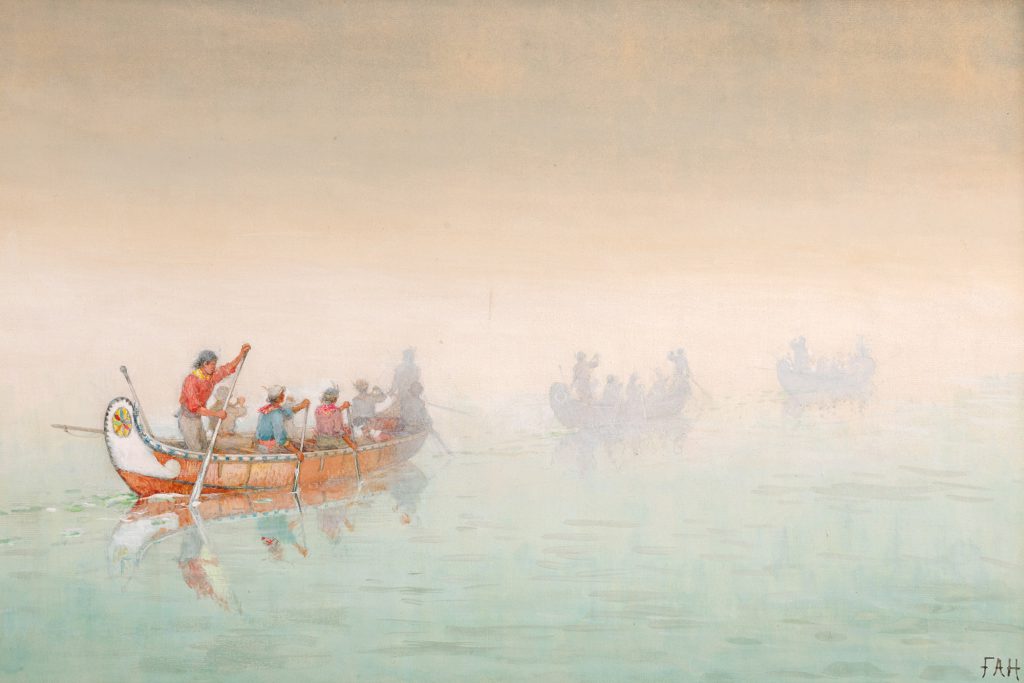
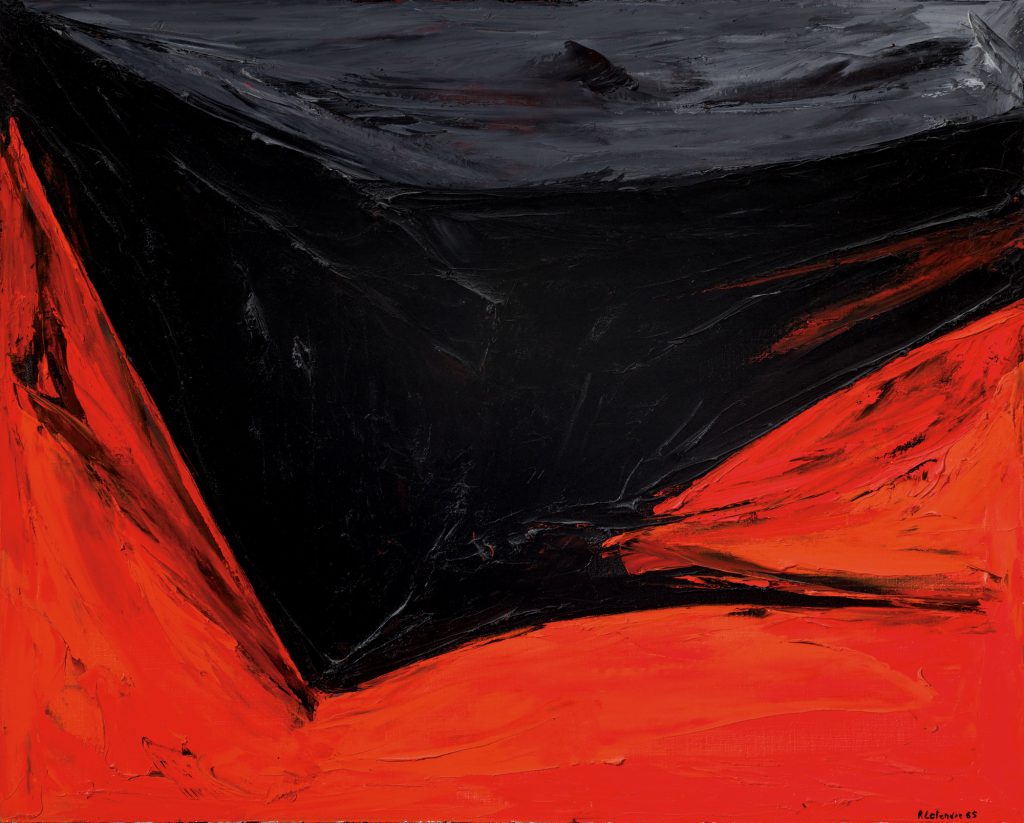
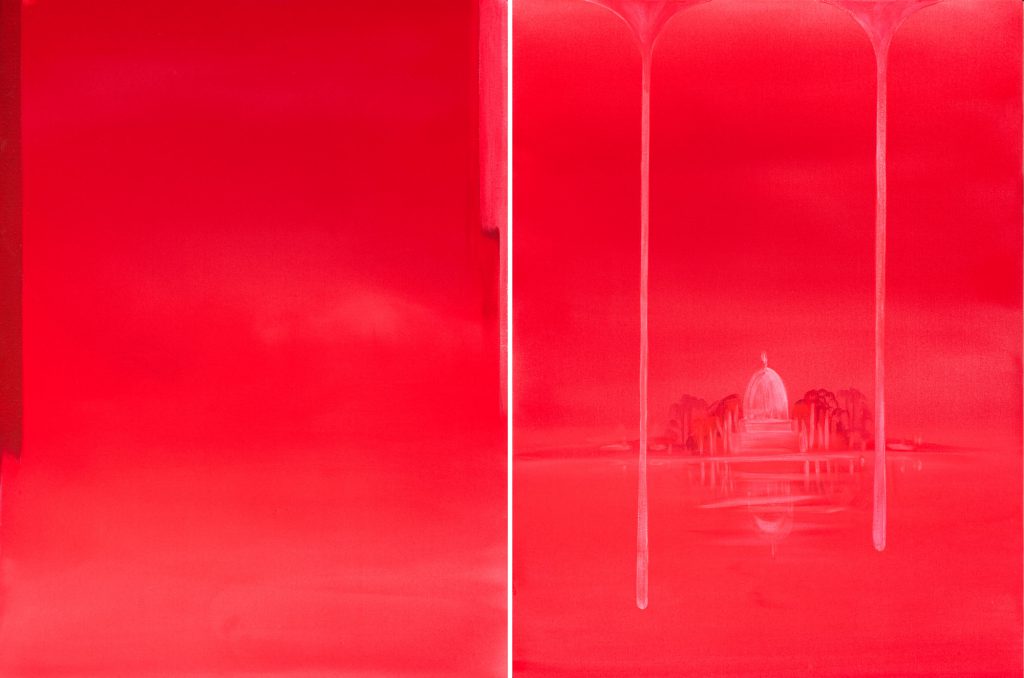
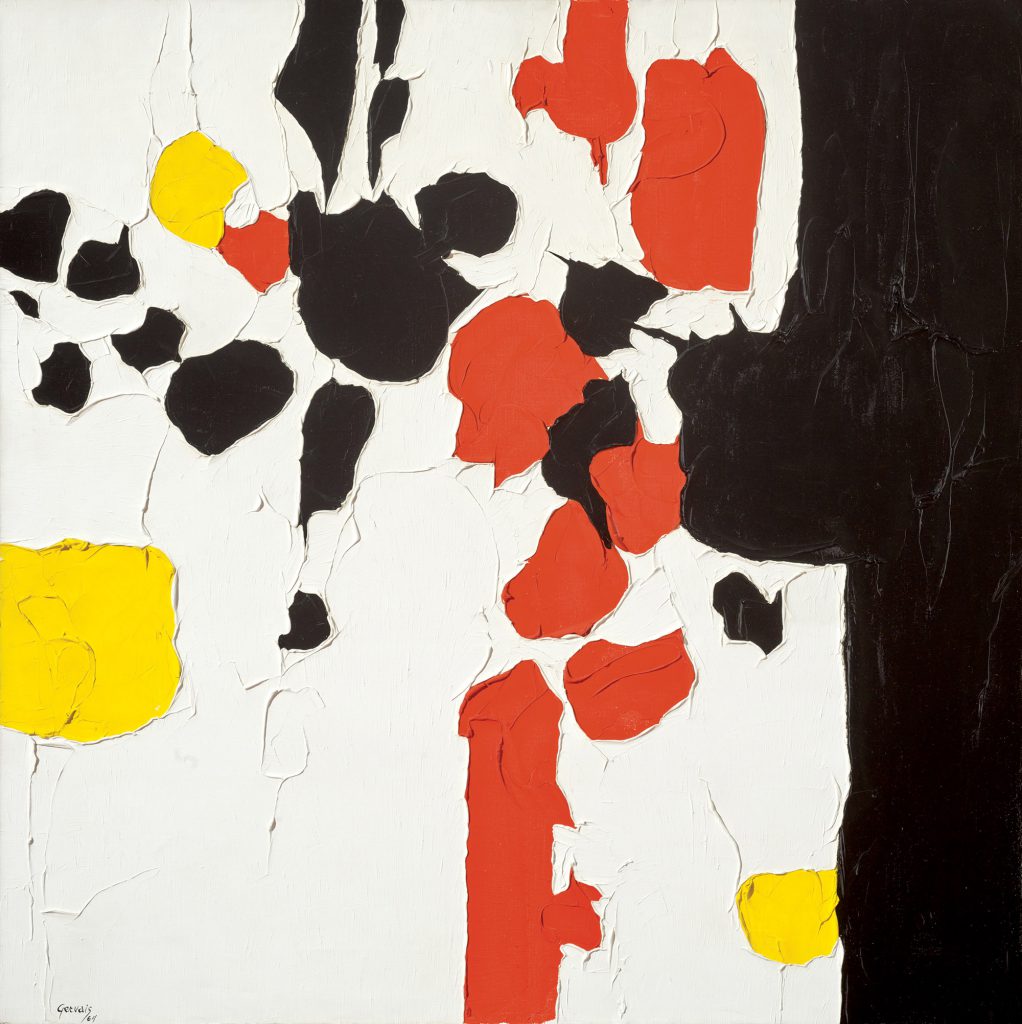
    From rare 1880s watercolours by Frances Anne Hopkins to an electric diptych by Wanda Koop, the Cowley Abbott spring live auction featured rare and important work from celebrated female Canadian artists, spanning more than 150 years of creation. Regardless of the period of the artwork, the rarity and quality of the paintings and works on paper invited spirited bidding with several works well exceeding their estimates. 

    Marcelle Ferron
    Sans titre, 1964
    Emily Carr
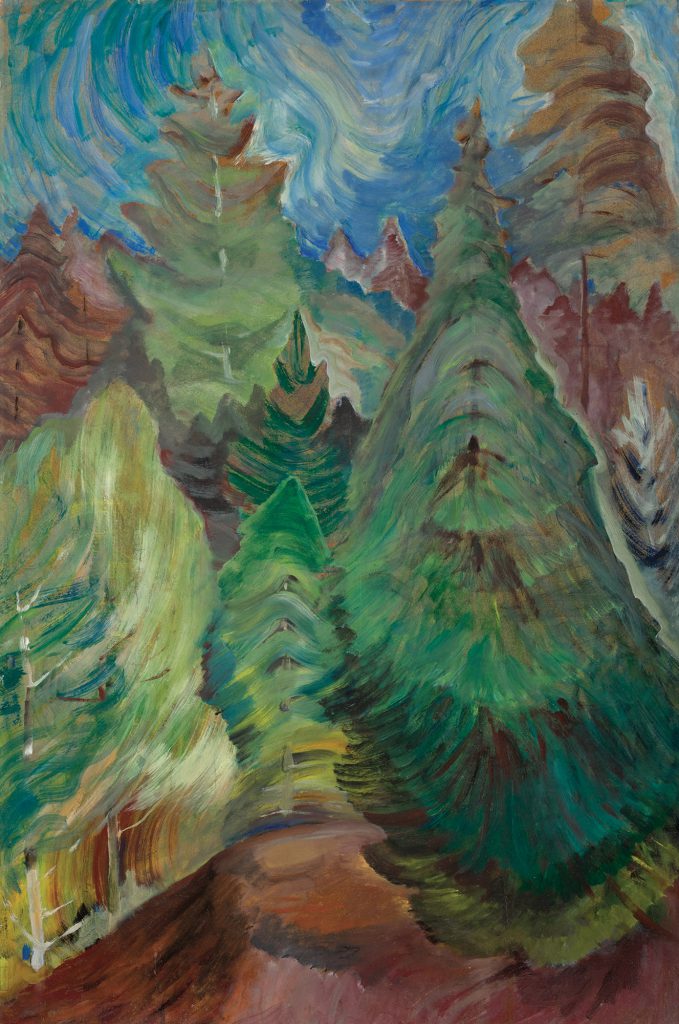
    Fir Trees, circa 1935
    Frances Anne Hopkins
    Canoes in a Fog, Lake Superior, 1864
    Rita Letendre
    Sans titre, 1965
    Wanda Koop
    Standing Withstanding (Infrared-Still); Standing Withstanding (Infrared-Capital), 2017
    Lise Gervais
    Le double anneau dans l’oeil, 1964